Alumni Profile: Lisa Briggs, E'07, G'09
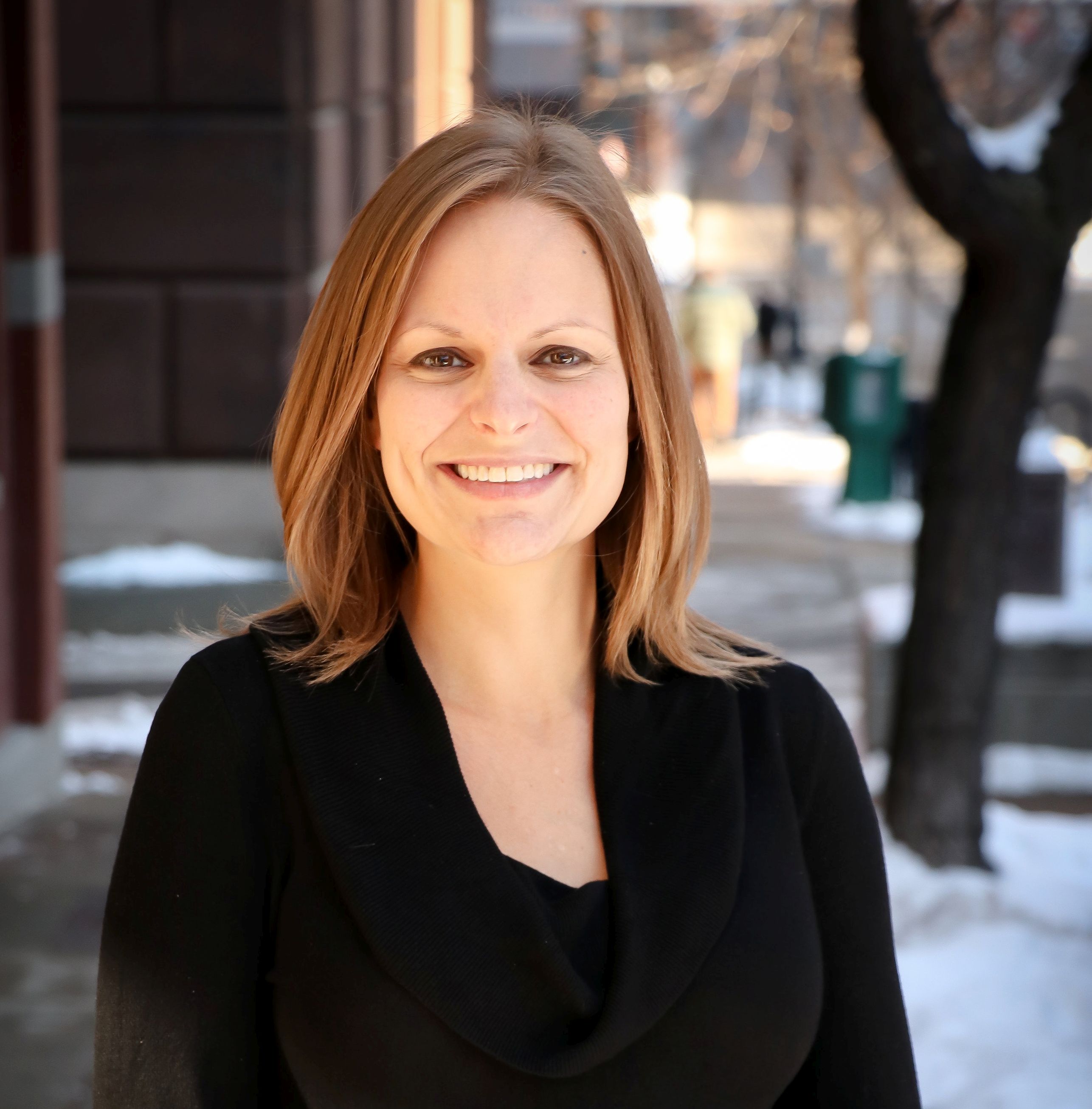
Lisa Briggs, E’07, G’09, has kept strong ties to the University of Kansas, where she earned both her bachelor’s and master’s degrees. An active member of the CEAE Department advisory board, Briggs has built a long career of structural engineering while staying closely connected to her alma mater.
Originally from just outside of Milwaukee, Wisconsin, Briggs works for structural engineering firm, Genesis Structures, with a team of just over 20 people, located in downtown Kansas City. Briggs joined the firm upon her graduation from KU and will complete her 17th year there this spring.
“I came down and I really loved the campus,” she said. “It felt like a very quintessential collegiate atmosphere that I kind of always had in my mind.”
Briggs always knew that she was good at math and science, which naturally pointed her in the direction of engineering. It wasn’t until she attended a weeklong youth summer camp at the University of Milwaukee, where she got to participate in a mini architecture studio, that she realized her interest in architecture.
Some of Briggs’ fondest memories during undergrad were from her architectural studio classes, which she describes as stressful but deeply rewarding.
“It was a cool bonding experience to have everybody working really hard towards completing a project,” she said, “Being there late at night and early into the morning seemed less like work with the fun group we had.”
While the architectural engineering program at KU looks a little different now, Briggs said many of the friendships she still maintains were forged during those studio classes.
Having originally planned on going into building design after a couple of related internships, the economic crash of 2009 sent Briggs in a different direction.
“Those types of firms were letting people go instead of hiring,” Briggs said. “I ended up sending my resume to Genesis, and it just sort of worked out that they were looking for someone. I was their first hire straight out of school.”
Briggs initially worked on structural aluminum skin systems for buildings before the firm decided to focus solely on the heavier, civil, bridge construction and demolition engineering.
“It was just kind of luck and chance,” Briggs said. “It’s always kind of a challenge, which is fun.”
“We do high-level construction and demolition engineering for bridges,” Briggs said.
Genesis Structures collaborates with contractors to make engineered plans for building bridges and taking them down safely.
“We do the full modeling, calcs, drawings, and walk them through the process that needs to happen, and then sign and seal the plan,” Briggs said.
Doing less of the number crunching now, Briggs primarily works on higher level project management. She guides younger engineers, helping them figure out what studies to do, and performs quality control checks to be sure that all the I's have been dotted at T’s have been crossed before the plan goes out the door.
Until Genesis gets a call from a contractor, projects often come with little advance notice. Projects range from “float-ins” and “float-outs,” for bridges on barges, to launches, to heavy lifts, where the bridge is built and then picked and moved into position. While Briggs doesn’t exactly have a “dream project” for the future, due to the one-of-a-kind and spontaneous work at Genesis, she enjoys the constant variety.
“Being able to get a little flavor of all the unique ways to build a bridge and getting to be continually involved in some of that stuff that really pushes the envelope in terms of outside-the-box thinking,” she said.
“I’ll travel to go out and be on site during those critical operations for the projects I’m a part of.”
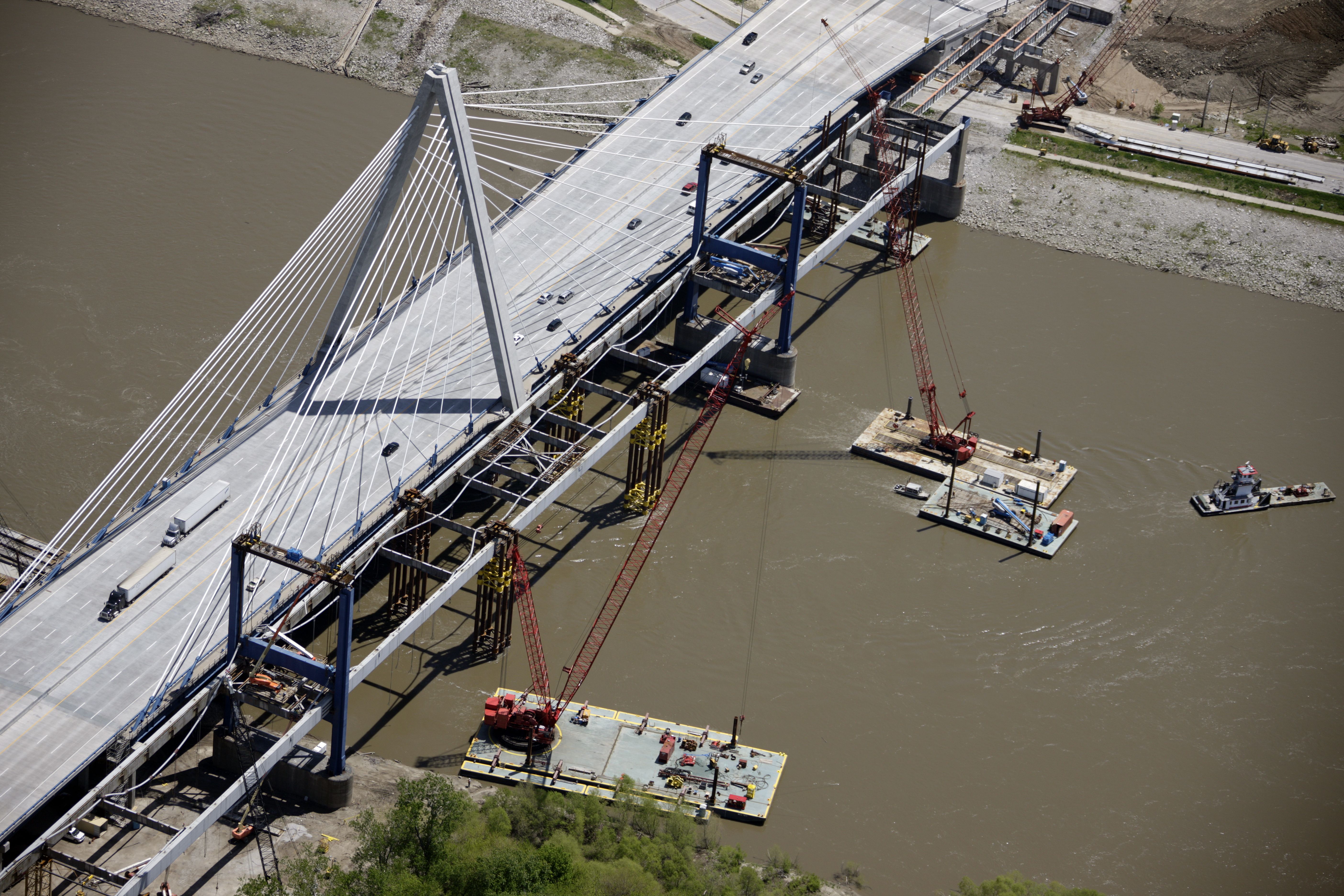
One early career highlight was her work on the demolition engineering for the Paseo Bridge over the Missouri River in downtown Kansas City. This was Briggs’ first big demolition project that was fairly complex – a demolition of a self-anchored suspension bridge.
“It was just really cool, since it was right in our backyard, being in downtown Kansas City, we could go and visit it and watch as things were progressing, and be a little more involved and on-site than we otherwise would for some other projects that are further away,” Briggs said.
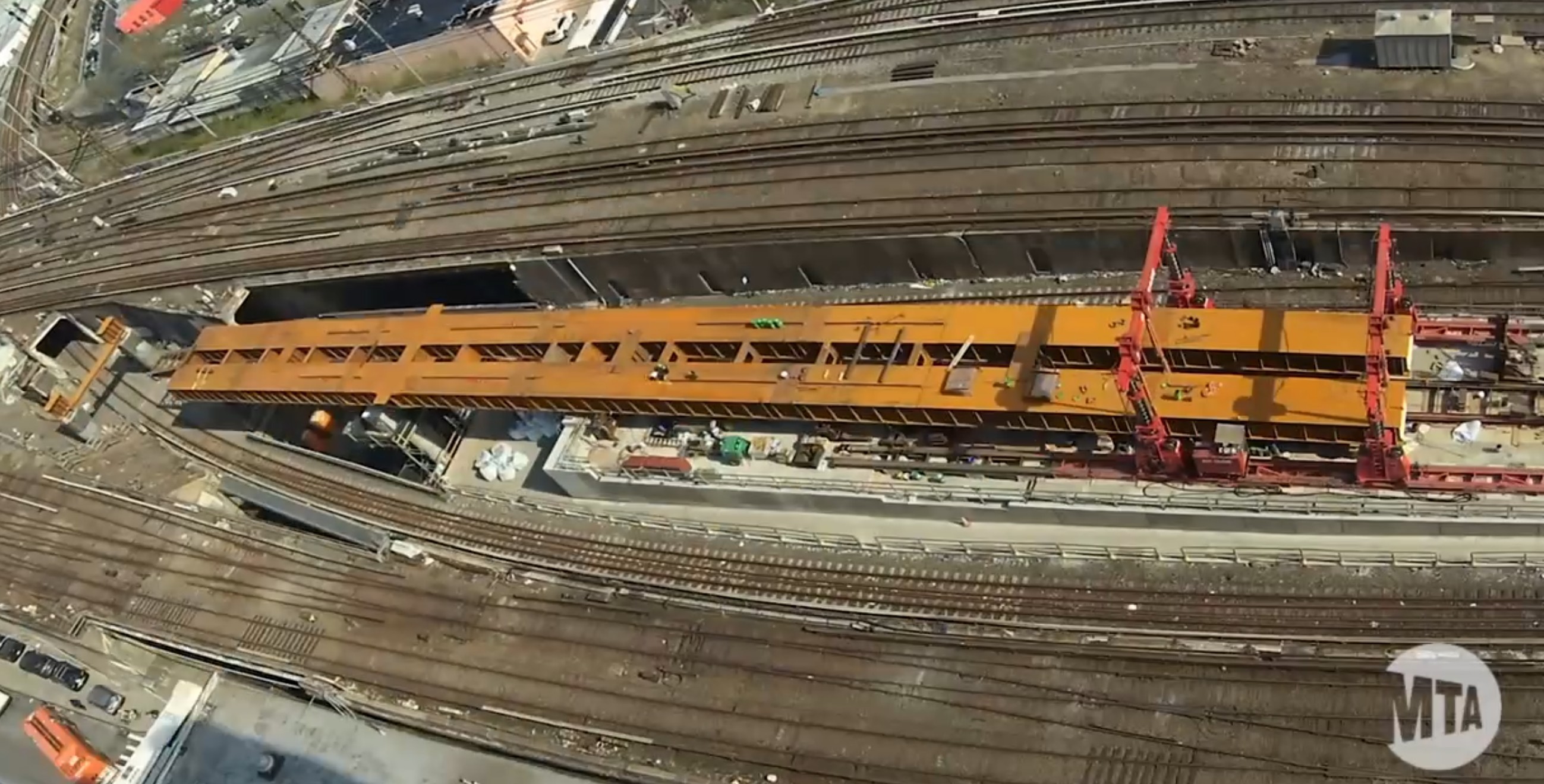
More recently, Briggs played a major role in constructing a new railroad bridge in Queens, New York. They performed a bridge launch, pushing the bridge out where it needed to go on rollers, and lowering it onto the bearings.
“That was one of the first projects that I managed top-to-bottom, did all the design, was responsible for being on-site during all the launch operations, and dealing with the ‘on-the-fly' changes out on the field while we were launching,” Briggs said. “That one was a lot of fun."
Traveling for projects isn’t anything new for Briggs. During graduate school, her research under Dr. Adolfo Matamoros took her to Minnesota for a semester and a summer, where KU shipped full-scale concrete column specimens to a lab at the University of Minnesota for cyclical compression load tests.
“It was fun to be involved in a real, full-scale test where we actually got to break things,” Briggs said with a laugh.
When invited to join the CEAE board at KU, Briggs was happy to accept.
“It seemed like a good way to get involved, and to help be a little bit more of a guiding force, provide input, and give back,” she said.
When asked what advice she would give someone interested in following in her footsteps, Briggs emphasized flexibility.
“If you think you know where you want to go in the industry, just know that there are a whole bunch of options,” Briggs said. “Be open to trying new things, even the things you weren’t sure that you wanted to do.”
Beyond KU, Briggs has also joined a demolition committee through the American Society of Civil Engineers (ASCE). Seeing the lack of available guide information for bridge demolition, Briggs helped write a best-practices guide for the industry.
“Even once you’re working, get involved in committees and see how you can help guide and affect the industry as a whole,” she said.
Briggs’ work requires a lot more thought for what she calls pure engineering.
“How can we be creative and come up with a different way to do something that’s maybe never been done?” She said, “The ability to visualize the bigger picture, like you do in architecture, has definitely helped in my career. A lot of the stuff we do is very unique, and you have to be able to think about how things are actually going to get built and put together.”
Rather than seeing engineering as purely technical, Briggs sees room for creativity.
“With a broader understanding of stability concepts,” she said, “you can actually make it a little more of an art.”
Photos provided by Lisa Briggs.