WE WiSH Consortium
Working toward Earthquake and Wind Safe Manufactured Housing (WE WiSH) Consortium
Welcome to the WE WiSH Consortium, where we are working towards earthquake- and wind-safe manufactured housing.
Wind provisions governing the design of manufactured homes have not changed since 1994. There are no provisions for earthquake-resistant design of manufactured homes. Some would say it is wishful thinking that we may change that. However, the WE WiSH consortium is bringing together academic researchers, industry professionals, and advocacy organizations committed to modernizing design standards without compromising affordability. If you’d like to become part of the movement, please reach out to the PI, Dr. Elaina Sutley, at enjsutley@ku.edu.
The WE WiSH Consortium is building momentum. We're a collaborative effort bringing together researchers from the University of Kansas, the University of Alabama, Florida International University, Texas Tech University, San Francisco State University, and the University of South Alabama. We have industry and organizational partners, and are performing cutting edge research to provide the evidence base for code modernization that keeps residents safe, reduces losses, and doesn't compromise affordability.
WiSH Project Background
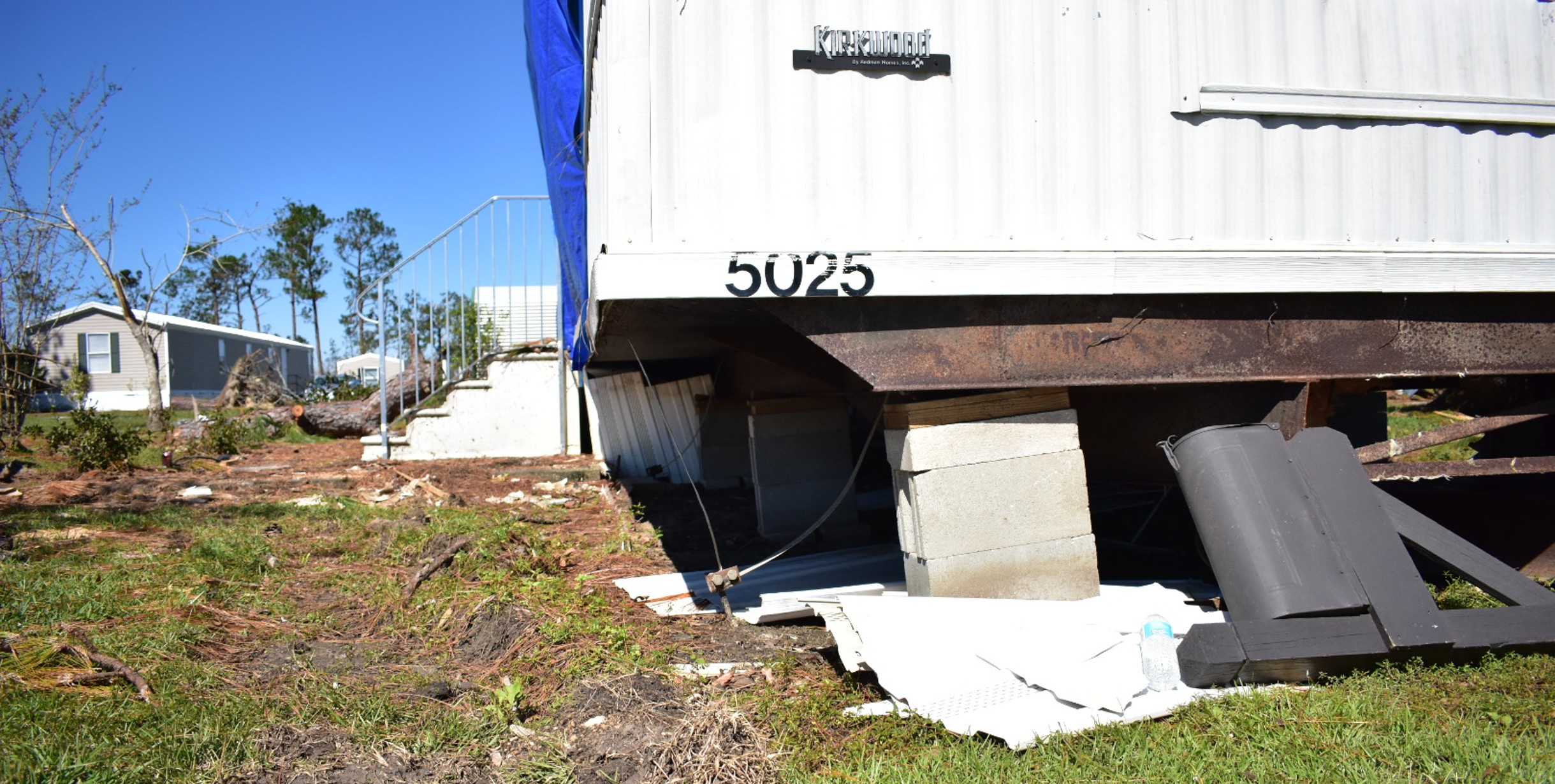
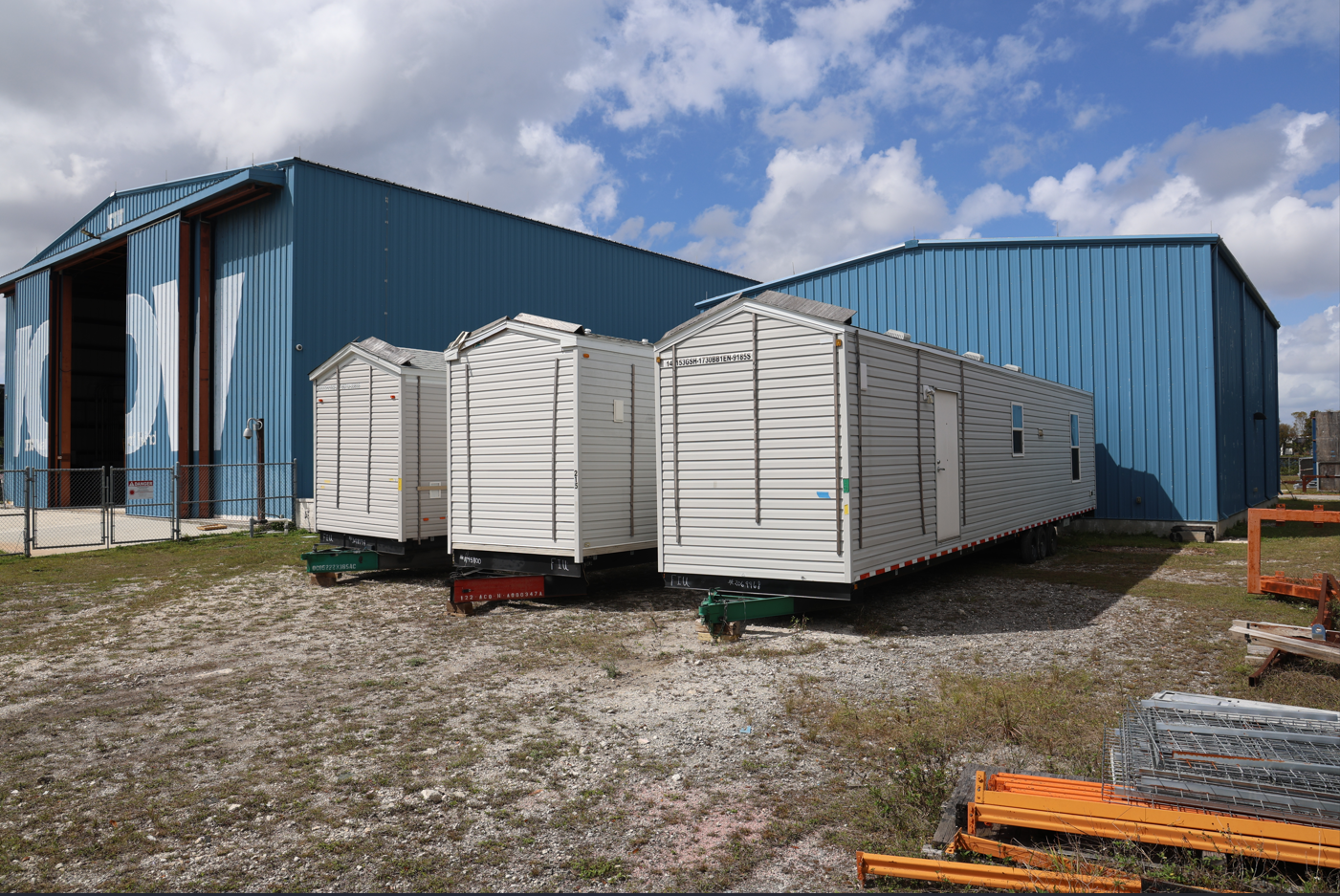
In 2021, the Florida Division of Emergency Management began funding our research focused on improving the wind performance of manufactured homes. This collaborative project between the University of Kansas, the University of Alabama and Florida International University has included dozens of experimental tests on full-scale connections, development of finite element models and wind-tunnel experiments on a large-scale unit, as well as on different mobile home park arrangements. This fifth year of the project is an exciting culmination of the prior advancements that involve the testing of three full-scale manufactured homes at the Wall of Wind Experimental Facility at FIU. Dubbed the WiSH Project - Working towards Wind Safe Manufactured Housing - with experiments on-going through May and June 2026. After the full-scale tests, the WiSH Project team will conduct wind pressure tests on a 1:8 scaled unit on the Wall of Wind turntable and a detailed wind field study outside the wind tunnel.
If you’re interested in receiving a monthly update on the project, or the link to the live streaming of the full-scale tests in May, please sign up here.
The research has continued and expanded over time. The full-scale wind tunnel tests are supported by funding from the Florida Division of Emergency Management, the National Science Foundation (read the award abstract here), the Federal Emergency Management Agency, and the U.S. Department of Housing and Urban Development and HUD-funded Center of Excellence in Capacity-building for REsilient Housing (CECREH) led out of Texas Tech University, as well as support and collaboration with the Applied Technology Council. More recent research, supported by the State of California Office of Emergency Management, led out of the Applied Technology Council with WJE, KU, UA, and SFSO team members, will conduct experiments and numerical analysis towards the development of earthquake-resistant installation provisions.
The multiagency support emphasizes the significance and potential impact of this research.
WiSH Project Testing Plan
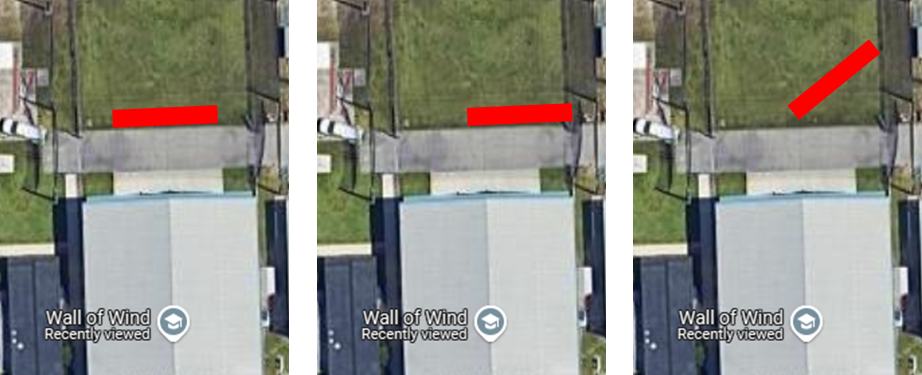
The testing program is designed to evaluate the structural performance and behavior of manufactured home installation systems under moderate and high wind loading conditions. The program spans eight weeks (May 4 – June 30, 2026) with over 20 individual wind tests planned across three specimens, systematically varying six independent parameters: wind zone anchorage level, crawl space skirting condition, building envelope enclosure state, crawl space elevation, gravity support type, wind speed, and unit orientation relative to the wind direction. Each specimen is tested first under Wind Zone III minimum prescriptive anchorage (the most restrictive), then reconfigured to Wind Zone I minimum (the least restrictive), with progressive wind speed increases from 70 mph to 130 mph. The primary objectives of the full-scale testing program are:
- Evaluate the structural adequacy of HUD Code minimum prescriptive anchorage for 8-foot wide single-section manufactured homes under Wind Zone I and Wind Zone III design wind loads.
- Characterize the overall aerodynamic loading and structural response of narrow manufactured homes under progressive wind speeds, with and without crawl space skirting enclosure.
- Document the failure modes, failure sequence, and load redistribution in the pier and anchor system under progressive wind loading up to and including design-level speeds.
- Compare the performance of dry-stacked CMU block piers versus manufactured steel jack stands as gravity support systems under combined gravity and wind loading.
- Evaluate the effect of crawl space elevation (36 inches vs. 48 inches) on overturning demand and anchorage performance.
- Evaluate the effect of wind approach angle (perpendicular, offset perpendicular, angled offset) on the component and cladding performance and failure mode.
- Provide experimental data for validating finite element models, and towards recommending code revisions for manufactured homes.
Research Findings To Date
| 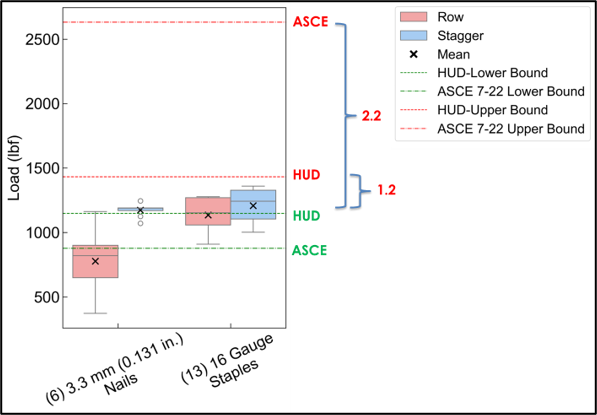 |
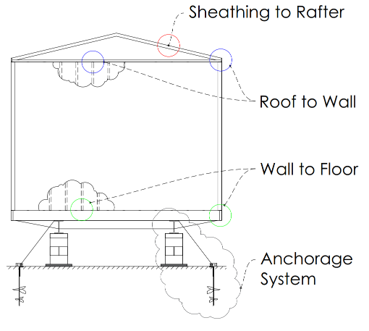
We’ve tested dozens of commonly used designs for structural connections in manufactured homes in the lab here at KU. Many of these exceed requirements and many do not meet HUD design requirements and greatly fall short of standards for site-built buildings.
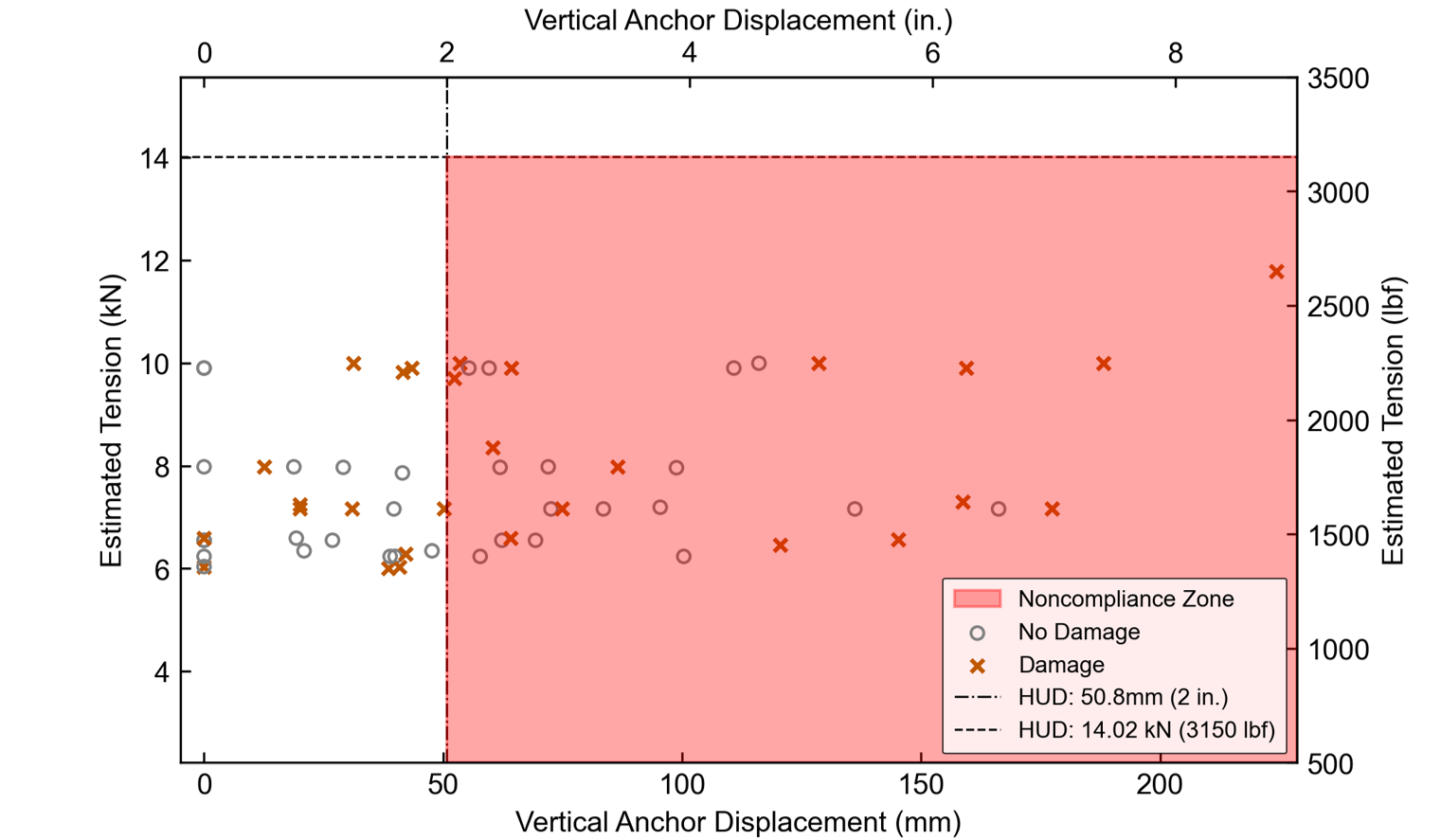
We’ve analyzed anchorage performance after Hurricane Michael. Our findings align with existing literature, confirming that auger anchors underperformed during Hurricane Michael, failing to meet codified working loads at the required displacements. Although anchors can prevent catastrophic failure, excessive displacement was observed under wind pressures below design thresholds, indicating a risk of foundation compromise in stronger wind events.
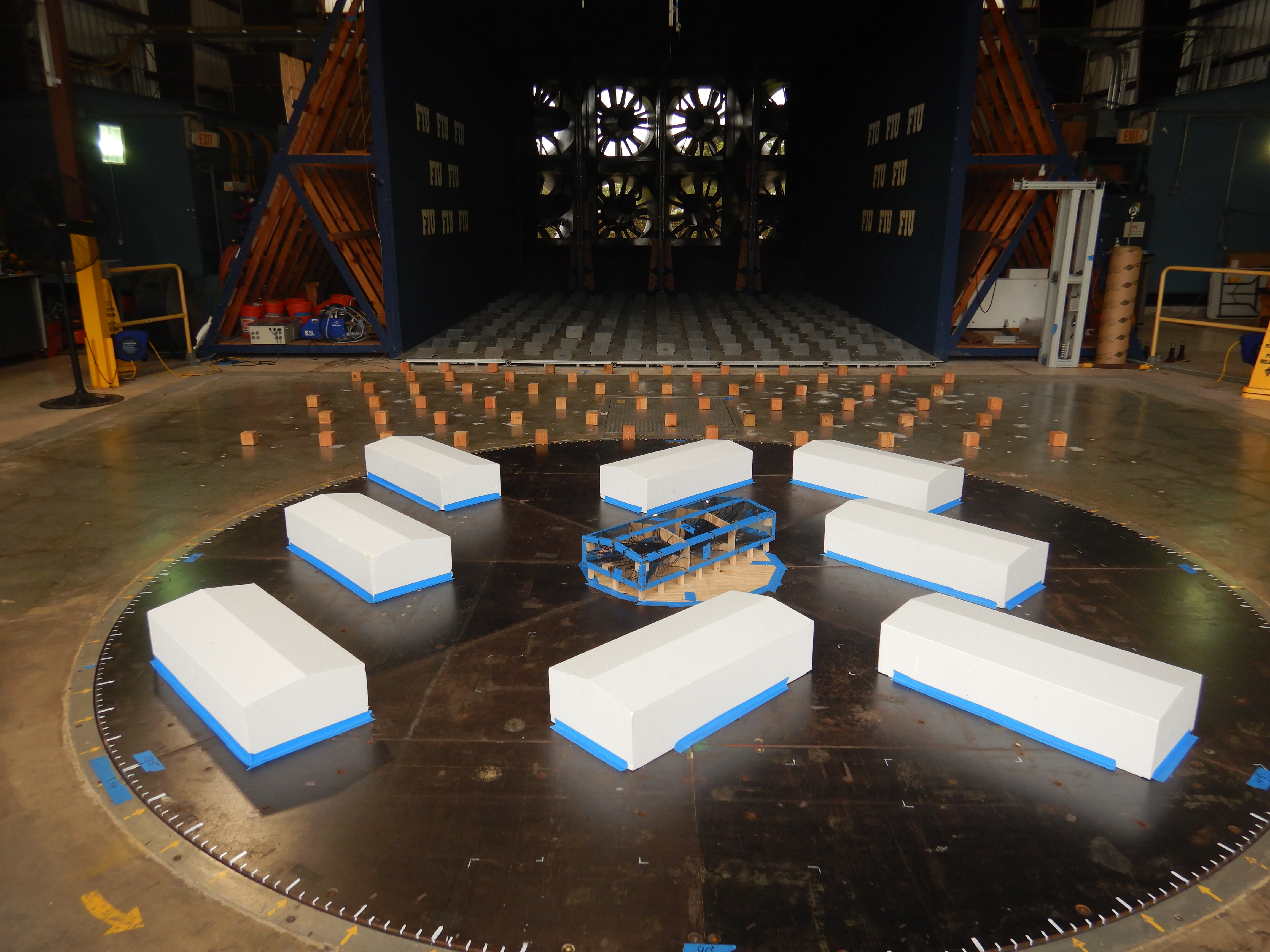
We’ve tested a small-scale unit in the Wall of Wind experimental facility to document wind pressure distributions to feed into a finite element model and have also measured wind pressure coefficients on different mobile home park arrangements.
Organized By
Disaster HOPE Labs Navigation
WiSH Project Collaborators



Research Funding