Linebacker and Leader

From a young age, football was in Ezra Vedral’s blood. A junior in civil engineering, Vedral came to the University of Kansas from Omaha, Nebraska, where he grew up the fourth of five siblings in a tight-knit, athletic family. Sports are practically a family tradition, with each one of Vedral’s siblings competing at the Division I level in different disciplines: football, basketball, track, cross country and pole vaulting.
Though athletics have always been important, Vedral has never wavered on his decision to major in engineering. In fact, having opportunities in both football and engineering was important when looking at future universities.
“I wanted to play football, and I wanted to study engineering,” he said. “I have never compromised on either school or football. I can’t imagine one without the other.”
KU was one university that checked every box and also offered Vedral the opportunity to stay close to home.
“I love getting back to Omaha whenever I can,” he said. “And at the time I committed, the football program was on an upward swing. I wanted to be a part of that.”
While athletics ran deep in the family, Vedral was also drawn to the problem-solving nature of civil engineering.
“I’ve always been a big math and science guy,” he said. “Never a big writer. Engineering was a good way to keep challenging myself in the areas I love.”
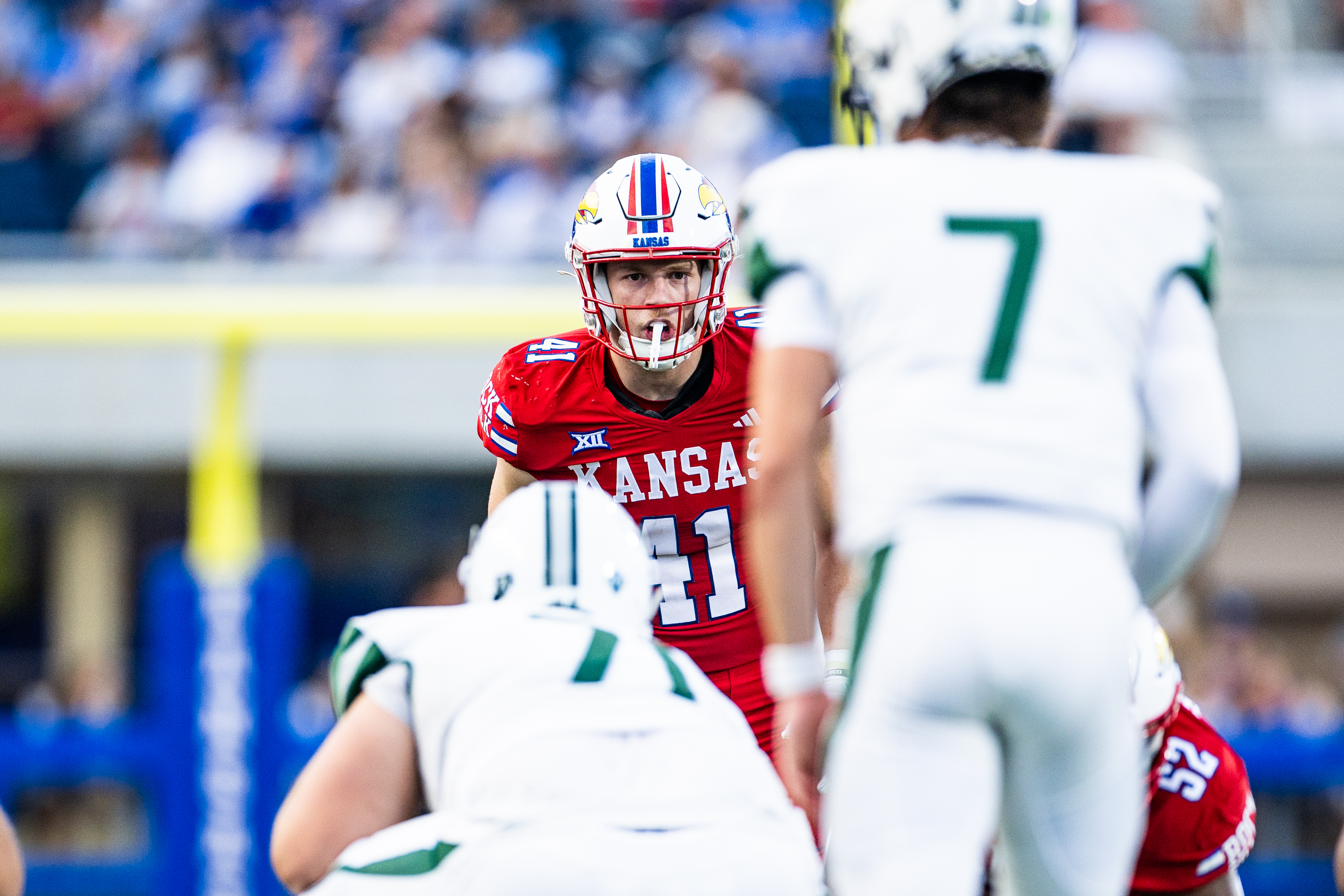
Now in his third year at KU and a redshirt sophomore, Vedral is firmly rooted in both communities. On the football field, he commands the middle linebacker position, a role that demands leadership, quick thinking and communication. In the classroom, he thrives in structural analysis and design, learning from professors who recognize the discipline and work ethic he brings from athletics. However, balancing football and engineering require more than just time management. It also demands resilience and sacrifice.
“Mindset is everything,” Vedral said. “You give up your free time and social life, but I haven’t really seen it as a sacrifice because I get so much from football and engineering.”
During football season, Vedral is up by 4:30 a.m. and at the facility an hour later. In the afternoon, he focuses on his schoolwork, attending his classes and working on homework. Spring and summer occasionally offer a little more flexibility, but even then, his commitments remain constant.
Vedral’s teammates are quick to admire his dual path.
“They always say they don’t know how I do it,” Vedral said with a laugh. “But then I see them writing tons of papers, and I tell them I could never do that. The math makes sense to me. It’s easier than writing a ten-page paper.”
Professors and peers in engineering have also been supportive, accommodating travel schedules and helping him balance group projects.
“It’s always a juggling act,” Vedral admitted, “but both communities have been great about working with me.”
The overlap between football and engineering might not be obvious at first glance, but Vedral sees the connections every day.

“There are so many things you learn in football about attitude and approaching problems with an unrelenting desire to get it done,” he said. “That carries over to engineering. If something’s not working, you find another way. You keep pushing.”
As a linebacker, Vedral is also responsible for reading the offense, communicating with teammates and getting everyone aligned before the snap. This sense of leadership kicks in as well when taking part in group engineering projects.
“If someone isn’t pulling their weight, you learn how to handle that,” Vedral said. “You know what needs to be said and how to get everyone moving in the right direction. Football has taught me how to lead by example and by communication.”
Three years in and Vedral’s time at KU has already been marked by several standout moments both on the field and in the classroom. On the football side, he recalls the thrill of KU’s upset victory over Oklahoma in his first season.
“They were ranked number six, so beating them at home was amazing,” he said.
Additionally, Vedral was named the CEAE Department’s “Outstanding Sophomore” at the 2025 Award Banquet.
“That was really special,” he recalled. “I was putting in a lot of work, and to be recognized like that felt incredible.”

Of course, juggling two demanding worlds isn’t easy, and Vedral admits the hardest part is navigating the cultural differences between football and engineering.
“They’re two very different communities,” he said. “You have specific people you go to for engineering problems and others for football problems. The way you act and interact is different in each.”
One of those people on both the engineering and athletics side is Dr. Will Collins, who Vedral credits as someone who has supported him throughout both sides of his college experience.
“I’ve really enjoyed learning from Dr. Collins,” he said. “I’m taking a steel design course with him that is really interesting, but he was also a student athlete, so I talk to him about his experience.”
On tough days, when both Vedral’s commitments feel overwhelming, he tries to keep perspective.
“I remind myself that this is one of the most formative times of my life,” he said. “I’m learning so much from both football and engineering. That motivates me to keep going.”
Beyond his packed schedule, Vedral finds ways to recharge. Watching movies and TV with his roommates is a favorite pastime, as well as playing other sports for fun when time allows.
“I’m a big volleyball fan,” he said. “Whenever I get the chance, I’m playing that or basketball.”
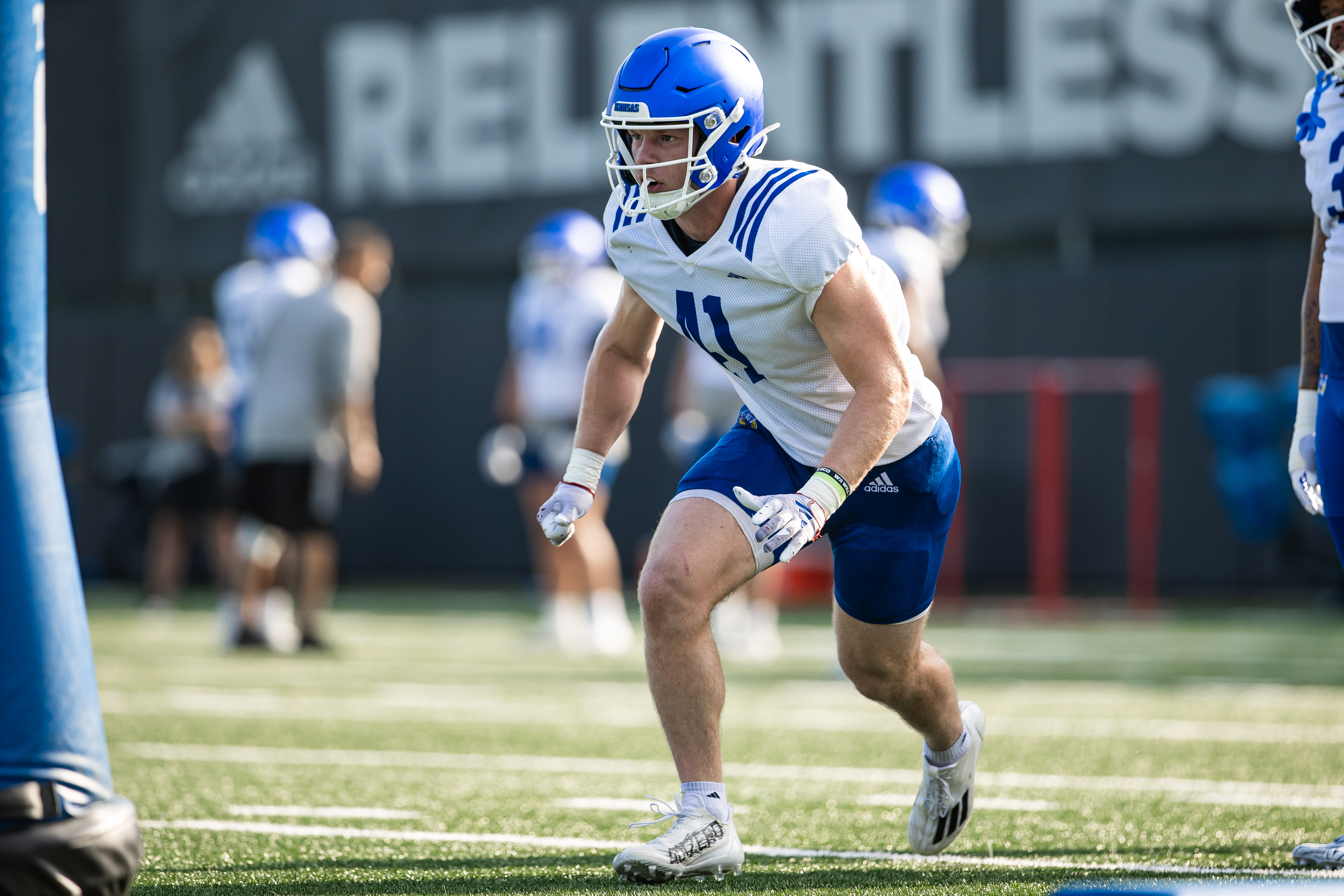
While football dominates his present, Vedral is starting to look ahead to the future.
“Once my eligibility is up, I want to get into the workforce with my degree,” he said. “I’d like to work as a structural engineer for whatever firm I can find a good fit in.”
Additionally, he’s realistic about where his path might take him.
“A lot of engineers with strong leadership and interpersonal skills end up in executive roles,” he explained. “I think I’d be good at that, even if it means doing less of the day-to-day engineering. Football has prepared me for that kind of leadership.”
For students looking at balancing academics and athletics, Vedral’s message is clear: it’s definitely possible.
“Don’t let anyone tell you it can’t be done,” he said. “The only person who decides that is you. Be prepared to make sacrifices, because it takes time to be great at something, but don’t be afraid to try.”
Looking back, Vedral can’t imagine choosing one path without the other. Football and engineering, though vastly different, have shaped him into a disciplined leader, a problem-solver and a teammate.

“The grueling environment of college football has made me a better leader,” he said. “And the challenges of engineering have sharpened my problem-solving skills. Together, they’re teaching me lessons I’ll use for the rest of my life.”
As he continues his journey at KU, Vedral’s story is a testament to what can happen when passion meets persistence. Whether he’s calling defensive plays on the field or calculating load paths in a classroom, he’s proving that success doesn’t come from choosing between two worlds but from thriving in both.
Photos provided by KU Athletics.