Grad Profile – Megan Wittman, Ph.D’26

Growing in central Illinois, Megan Wittman came to KU with a restlessness that would ultimately define her path.
“I started the political science club in my high school, and I was in the engineering club,” she said. “I was used to doing a lot of different things.”
That instinct to move between worlds is what drew her to Lawrence in the first place. During her college search prior to her undergraduate career, other schools she visited made it clear that engineering would consume her time entirely. KU said something different.
“This was the first place where they said I could be a student and be involved in other things not necessarily engineering focused,” she said.
For her first two years, that was definitely the case. She joined a sorority and did her part on student senate on top of her coursework. But by her junior year, a different kind of curiosity and interest set in. As a chemical engineer, Wittman was looking toward a career in oil and gas and she was pretty positive that was not where she wanted to end up.
“I didn’t want to use my skills to make the environment worse,” she said.
The change came quickly, through an honors section of an introductory environmental engineering course. After the regular class ended, students stayed to discuss the social and political implications of their field – cancer clusters tied to water treatment in steel-mining communities, the cascading consequences of infrastructure decisions made decades ago. Wittman was hooked.

Despite having an oil and gas internship lined up for the summer, Wittman met with Dr. Belinda Sturm the week before the semester ended for some career advice. Sturm offered her something better: a summer research project sampling microplastics at wastewater treatment plants across Kansas.
“I worked on a farm growing up so it kind of felt like going full circle,” Wittman said. “I love talking to the people who work in those industries.”
That summer changed everything. It was 2019, before microplastics had become a household conversation, and Wittman was already in the field collecting data. The following summer, she interned with Stanford and the Colorado School of Mines, this time working on the computational side, using imaging and code to classify sludge, something Wittman had had no previous experience with.
“It was a whole new world,” she said.
By senior year, the question was no longer what she wanted to study. It was how far she was willing to go. She was awarded the Self Graduate Fellowship and decided to stay at KU for her Ph.D., working alongside Sturm researching energy-efficient wastewater treatment. In particular, the funding for professional development within her field helped her to attend conferences and build her professional network.
“Those experiences not only helped me get my name out there, but also introduced me to additional resources and potential collaborators through networking and friendships formed at conferences,” said Wittman.
Alongside her working relationship with Sturm, Wittman decided to stay with KU because of its relationships with full-scale industry partners.

“The City of Lawrence is so amazing to our department,” she said. “If I wanted to try a new method, they’d let me come out there and get some sludge samples.”
That access shaped the entire character of her research. At three in the morning, operators would call to let her know her reactors were overflowing. She built test systems inside a working treatment facility. She learned to strip wire and troubleshoot electrical problems with the CEAE lab technicians at her side.
“Some of the funniest moments have been us trying to do things that did not go as planned,” she said.
Her doctoral work sits at the intersection of process intensification and environmental urgency: how do you treat more wastewater, at higher capacity, with less energy, fewer chemicals and less cost – all within the same footprint? Most treatment plants, she notes, are built in the worst possible locations and have nowhere left to expand.
“Everything is all about getting more out of what we currently have,” Wittman said.
She has spent her Ph.D. working on three Water Research Foundation projects – the primary funding body in her field – alongside consulting firms, utilities and academic partners. The goal is always the same: moving promising technologies from laboratory scale to full-scale implementation and doing it soon enough to matter.
“I’m hoping that by being exposed to this, I can position myself as someone who can help decide what the next big thing is,” she said.
In the classroom, faculty set the tone for that ambition. Alongside her mentor, Dr. Sturm, Wittman also recognizes Dr. Justin Hutchison for how he holds people accountable to rigor.
“I think it’s such a sign of respect to have someone ask you hard questions and challenge you,” she said. “He’s asked me my hardest questions during my qualifying exams, my comprehensive exams and my dissertation, and I’m so grateful.”
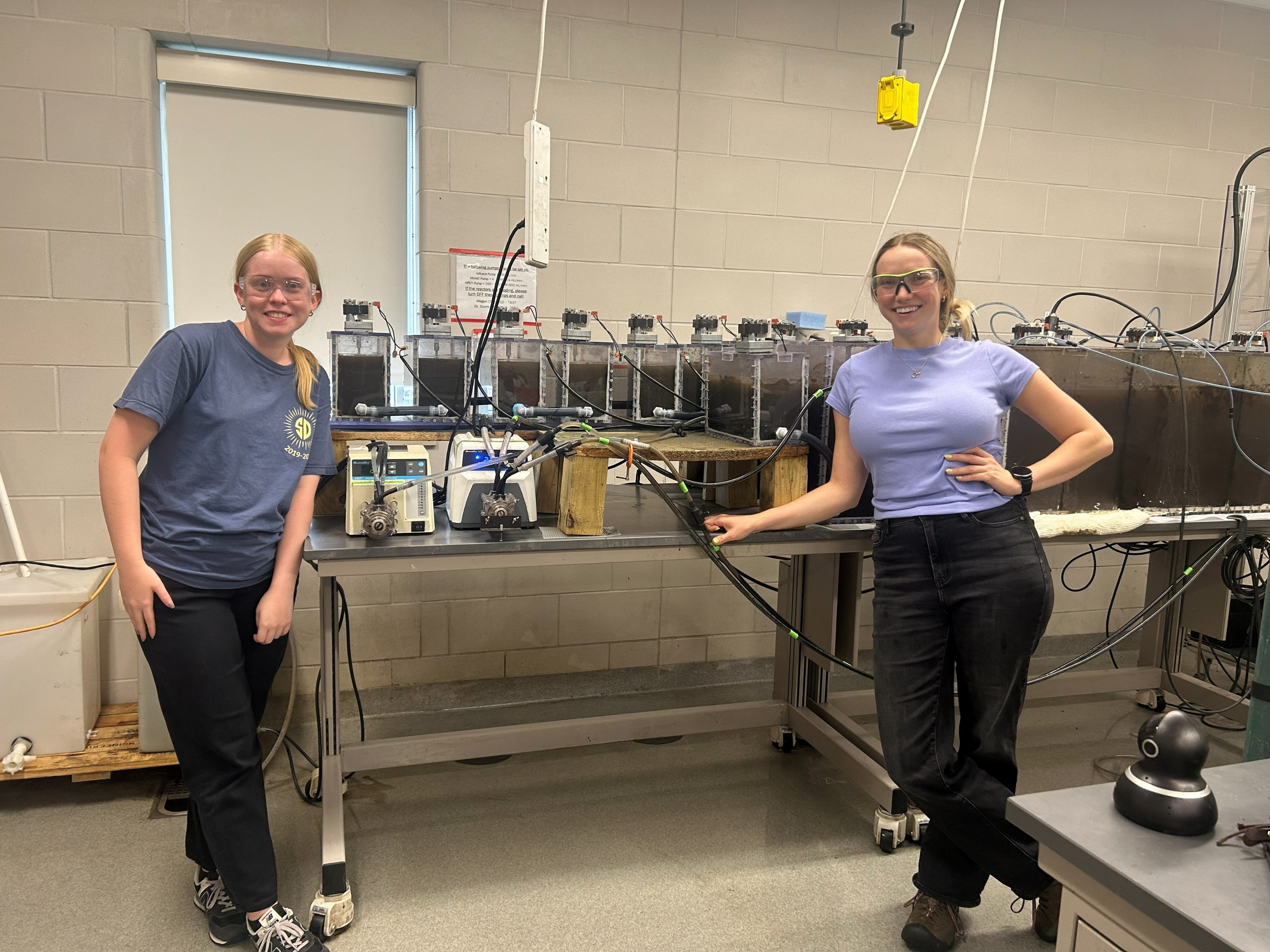
As her academic career comes to a close, Wittman is fielding offers from engineering consulting firms, which has her looking back on the experience in a new lens. Once worried about the timeline of completing her doctorate, it turned out not to matter at all.
“If you find a school or an advisor or people who support you through the hard times, you’re going to do it,” Wittman said.
Her advice to undergraduates and prospective graduate students is the same: stop trying to do it right, because there is no right way.
“I didn’t get involved in research until my junior year and then I went and got my Ph.D. doing research,” she said. “Allow yourself to explore within the safety net of college.”
Wittman has mentored ten undergraduates during her time at KU, and she tells each of them the same thing. Find your passion. Connect it to your work. Let that be the thing that carries you through.
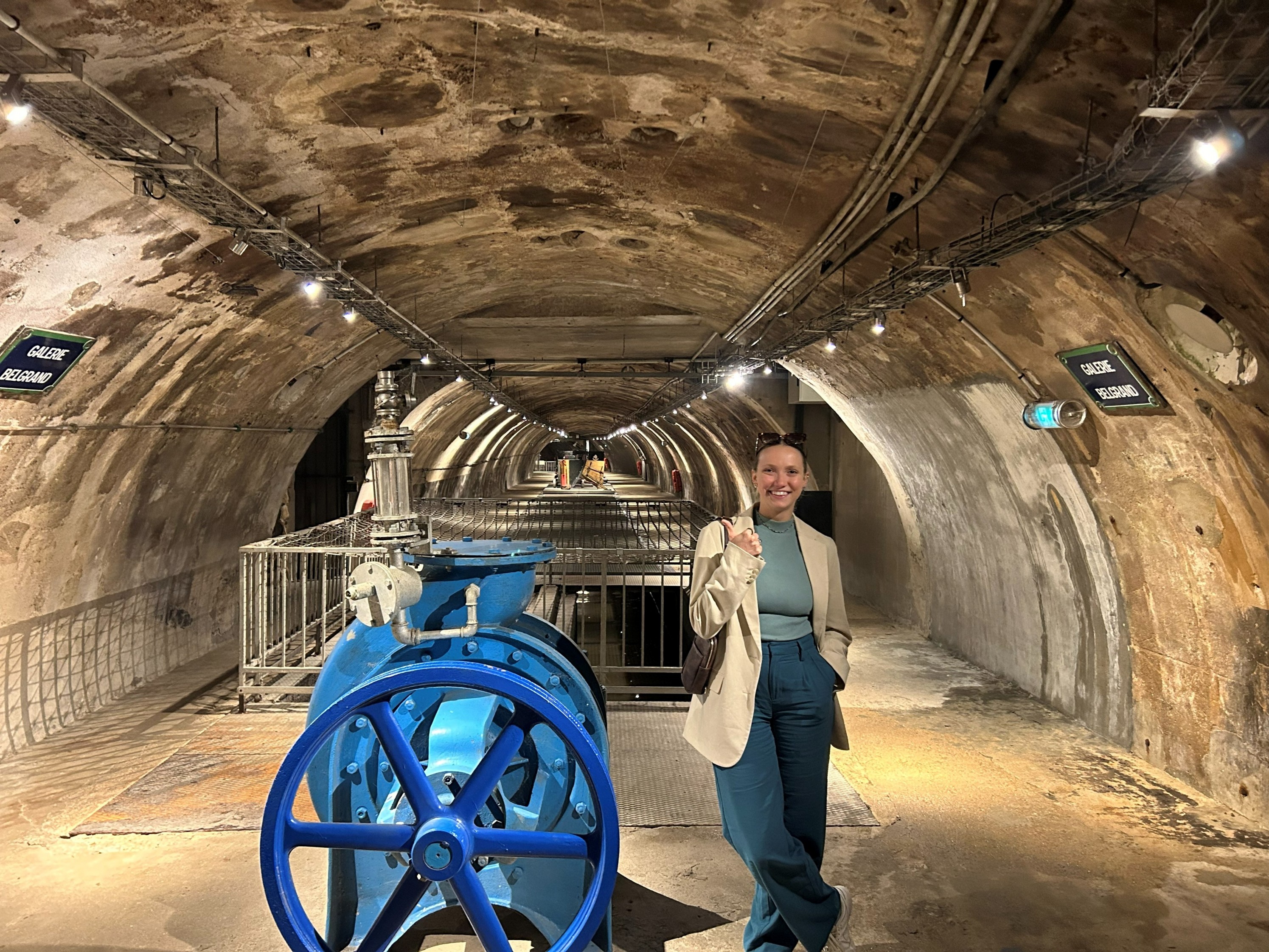
For Wittman, that passion is unmistakable – and it has a way of traveling.
“My grandma, who lives in a town of like 400 people, goes around and tells people that her granddaughter cleans their water,” she said with a laugh. “Which isn’t exactly what I’m doing, but I’m so happy that that is something she’s proud to share with others.”