Engineering Trust, One Road at a Time

When Shivraj Patil boarded his first-ever flight in 2013, leaving behind his family in western India to pursue a master’s degree at the University of Kansas, he wasn’t sure what to expect. A lifelong fascination with roads had led him around the globe, but he hadn’t even Googled Lawrence, Kansas.
“All I knew of the United States was skyscrapers in New York or Miami from TV or movies,” he said with a laugh. “Driving in from Kansas City International to Lawrence, the tallest building I saw was maybe three stories.”
Twelve years on, Patil is a Traffic Engineering team leader with GFT, formerly TranSystems, and manages Kansas’ Statewide Traffic Management Center. He oversees projects that touch the daily lives of millions of drivers across Kansas and beyond.
Patil traces his love for transportation engineering back to the road trips of his childhood. Growing up in a city roughly the size of Wichita, with extended family about 100 kilometers away, Patil and his family made routine trips between the towns. At first, the route was a narrow, two-lane road, but as infrastructure projects slowly transformed the roadway into a four-lane highway and eventually a complete freeway, Patil was captivated.
“I was in sixth or seventh grade, just amazed watching the change,” he said. “I’d look at the pavement, the new lanes, the scale of it all. It was incredible that something so small could transform into something so huge and imposing. That’s when I knew I wanted to be in transportation.”
After completing his bachelor’s degree in civil engineering in India, Patil decided to continue his studies abroad. Word of mouth from a former roommate led him to Kansas and to the CEAE department.
Patil immersed himself in the civil engineering master’s program, specializing in transportation, which expanded his understanding of the field beyond highways.
“I realized just how many avenues transportation engineering has,” he said. “I didn’t know which direction I wanted at first, but the conversations I had with Dr. Schrock and Dr. Mulinazzi really helped. They listed out the options and that guidance led me toward traffic engineering.”
The program was hands-on, providing priceless experience for Patil and the rest of his cohorts. He recalls countless field assignments, driving a trailer for his thesis project on portable traffic signals and collaborating with fellow graduate students on data collection.
“We don’t talk enough about that,” he reflects. “In the real world, people ask about projects you’ve done at work. But honestly, the fieldwork and collaboration we did at KU gave me the foundation I use even today. Those experiences have been the stepping-stones.”
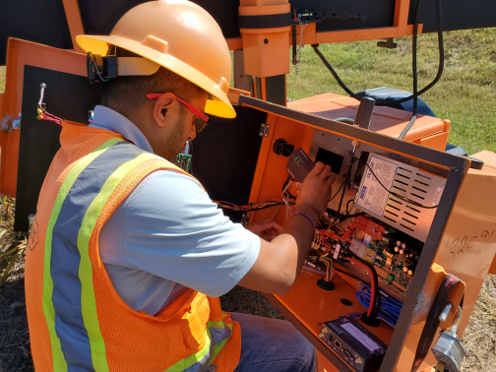
Today, his thesis is still in use, aiding in the safety of the State’s infrastructure.
“It’s amazing to see something I worked on in school being applied statewide,” he said.
Upon graduation in 2015, Patil joined GFT (then TranSystems) as a Traffic Engineer where he took on the work of day-to-day operations at the Wichita-based WICHway Traffic Management Center (TMC), a Kansas Department of Transportation (KDOT) initiative.
“The project runs the operations of an entire metro area’s highway technology,” Patil said. “It’s fascinating. Everything from the dynamic message signs to the cameras, the sensors. It was still fairly new for the State at the time, and I was excited to be a part of it.”
From 2015 to 2019, Patil’s days revolved around the Wichita metro system. In 2019, the project expanded to cover the entire state of Kansas, with WICHway managing the statewide highway cameras, incident alerts, adverse weather and roadway messaging, excluding Kansas City.
“That was a big moment,” he said. “It showed how well we had performed in Wichita that the State trusted us to handle it on a larger scale.”
Today, the TMC continues to be his most rewarding project, both personally and professionally.
“I can’t take credit for the system,” he said, “but I’m part of something that helps hundreds of thousands of people every single day.”
In less than a decade, Patil rose to team leader for GFT’s Midwest traffic engineering operations. He manages not only the Wichita TMC team but also oversees projects across the region.
“The faith the company had in me was humbling,” he said. “Being a team leader came sooner than I expected. Now a big part of my role is training the next generation of engineers and helping them get up to speed.”
For Patil, leadership is less about titles and more about trust.
“My only career goal has been simple: be good at what I do,” he said. “If someone can pick up the phone, call me and trust my opinion, I’ve succeeded. It doesn’t matter if I’m an intern or a CEO.”
This trust is imperative in every aspect of Patil’s work. Managing traffic for an entire metro area and a whole state comes with constant pressure. Accuracy is paramount.
“It takes ten good messages to undo the damage of a single bad one,” he said. “If a sign says, ‘Crash ahead, merge right,’ and there’s nothing there, people won’t trust the system next time. We have to be right ten out of ten times.”
Winter storms, multiple incidents and limited resources make perfection challenging, but Patil doesn’t let that stop his team from doing their best.
“There are days with 18 different things happening at once. Something might slip through,” he said. “You just do your best, stay transparent and earn the public’s trust day after day.”
While large-scale projects like WICHway make headlines, Patil finds equal pride in smaller efforts. He highlights KDOT’s Traffic Engineering Assistance Program, which funds affordable traffic studies for small towns.
For example, Patil was involved in a project for Lyons, a small town of about 3,000 people located in the center of Kansas.
“All they needed was to evaluate whether going from a signalized intersection to a two-way stop was feasible. It was small, but they didn’t have the funding themselves,” said Patil. “When we came in, the city officials were so grateful. Those projects are incredibly rewarding.”
These small-town projects are just as impactful as the multi-million-dollar highway initiatives.
“At the end of the day, most of Kansas is rural,” he said. “Helping smaller communities matters. It’s about not forgetting where you come from.”
Throughout his career, Patil has witnessed a decade of rapid technological change in traffic management. When he started, the roadside assistance cameras were grainy and unreliable. Today, they have crisp color, night vision and even wipers to clear the rain.
“Technology evolves constantly,” he said. “Every week there’s someone pitching something new. We always have to be careful and ask if it’s really useful. Will it still matter in ten years, or be obsolete in two?”
While talk across all industries had been about artificial intelligence and its use in the workforce, Patil believes that human oversight will remain essential, particularly in the traffic management industry.
“We let the systems process the data,” he explains, “but a human makes the final call. If there’s a high wind warning, for example, we confirm before posting it. Public trust depends on accuracy.”
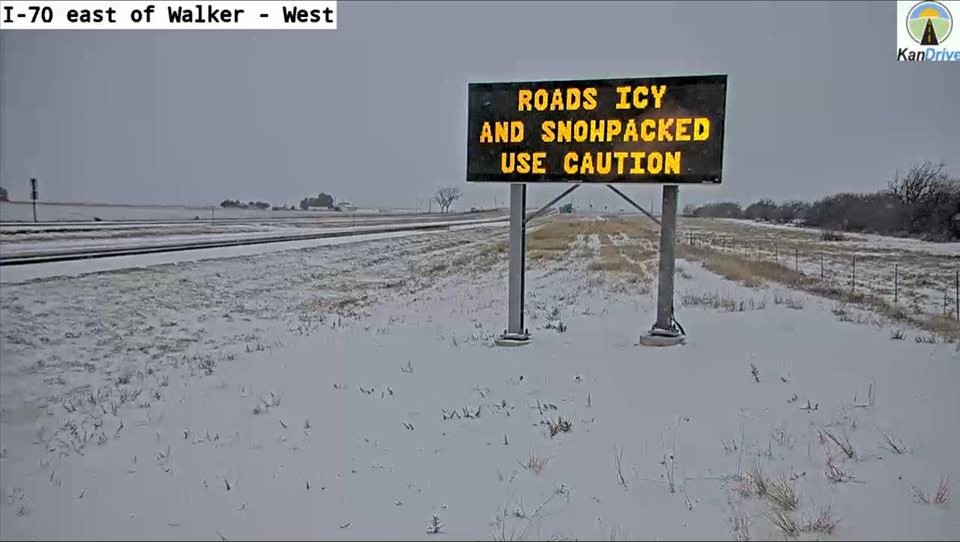
Accuracy is a common thread throughout Patil’s career. That and safety. From training law enforcement officers in traffic incident management to updating drivers on travel times, his work reduces risks and saves lives.
“When 60 to 70 percent of drivers change routes after seeing a delay message, that’s potentially tens of secondary crashes avoided,” he said. “Taking people off a highway at high speeds and onto city roads may inconvenience them, but it could prevent something fatal.”
His work also intersects with public emergencies like amber alerts, tornado warnings, flash floods, snow and ice storms and so much more.
“We’re tied into every kind of emergency event in Kansas,” he said. “Our goal is to always protect both; the traveling public and the responders.”
Despite his achievements, Patil stays humble when looking toward the future of his career.
“If you define success too narrowly, you risk losing your hunger once you achieve it,” he said. “For me, the goal is simply to be better every day. That applies today, tomorrow and even at retirement age.”
Still, he sees his immediate future in mentorship.
“Right now, my focus is on training young engineers,” he said. “Passing along knowledge is how you make sure the industry keeps growing.”
To continue that mentorship, Patil offers some straightforward advice for any students considering careers in traffic engineering or intelligent transportation systems.
“Don’t chase the shiny new toy,” he said. “Technology changes too fast. Focus on your basics. If you understand the fundamentals, you can adapt to anything.”
From his start on witnessing the growing roads in his hometown to shaping the safety of Kansas drivers, Patil’s career has been built not on chasing prestige, but on building trust, staying curious and never forgetting the people whose lives depend on the work.
“At the end of the day, it’s all about safety and improving lives,” Patil said. “If I can do that for Kansas, the place that gave me my start, it’s even more meaningful.”
Photos provided by Shivraj Patil.