Engineering Resilience
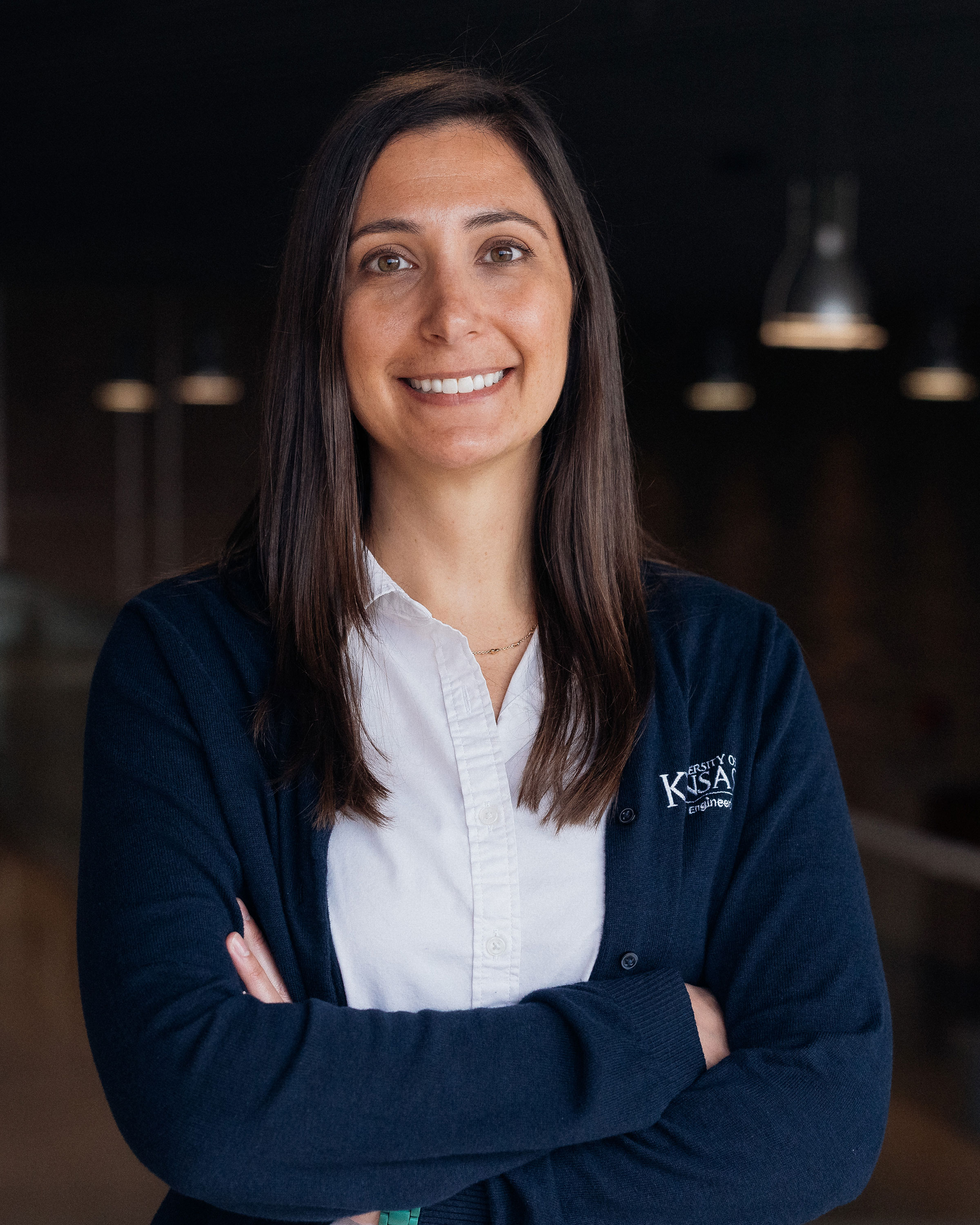
Civil Engineering wasn’t initially the plan for Elaina Sutley when she was contemplating her future. Growing up in a small town in Alabama, there were few professional options, and her choices were limited.
“As long as I can remember, I wanted to be a lawyer,” Sutley said. “In my town, if you wanted to be a professional, you could either be a doctor or a lawyer. I was too queasy around needles, so law was the obvious path.”
When she joined the University of Alabama as an undergraduate, she started work on a business degree with her sights set on attending law school at Harvard. She enjoyed the idea of making compelling cases before a judge, advocating for clients and shaping arguments with logic and persuasion. Structural beams, load calculations and disaster resilience were nowhere on her radar.
Life, however, has a way of shifting trajectories. For Sutley, it was when a lawyer from her hometown encouraged her to pursue civil engineering, knowing her high scores in math and science, and suggesting it would give her an edge in a competitive law school.
“My junior year of college, I took the intro to structural engineering class – what we call structural analysis here at KU - and the professor of that class had a position for a GRA open up on an NSF project studying nanomaterials,” Sutley recalls. “One thing led to another, and I signed up to do a master’s degree.”
The National Science Foundation, or NSF, supports fundamental research and education in all non-medical fields of science and information. This project may have been the first NSF-funded project Sutley was a part of, but it definitely wasn’t the last.

“While I was in the middle of my master’s degree, I met my eventual Ph.D. advisor and loved his research on earthquake engineering,” Sutley said. “We bonded over the fact that he had also wanted to go to law school and that his goals had changed. I signed up to do a Ph.D. with him before I had even finished my first semester as a master’s student and the rest is history.”
She relocated to Colorado to complete her doctorate at Colorado State University, where her research expanded into earthquake engineering and, ultimately, into the field that has defined her career: community disaster resilience.
“Having a social science component in my research is important because a big part of it is looking at inequities and disparities in underserved populations, but with the context of disasters in communities,” Sutley said. “As a structural engineer, buildings are one thing we care about, but the impacts of extreme events are not just a structural engineering problem.”
By 2015, Sutley had finished her doctorate and accepted a position at the School of Engineering at KU, a move that surprised even her.
“Life has a way to take you where you are supposed to be," she said with a laugh. "The people were welcoming, the facilities were impressive, and KU is an R1 institution that values research. That gave me the space and support to develop my work.”
In 2021, Sutley stepped into a new role within the School as the Associate Dean for Diversity, Equity, Inclusion and Belonging. This role shifted in 2024 to Associate Dean for Impact and Belonging, reflecting an evolving vision. Through initiatives like IHAWKe, an umbrella organization that brings together all student groups within the School, Sutley has worked to ensure that all students feel connected to the engineering community.
“Belonging starts early,” she said. “We have summer programs for incoming freshman, outreach for middle and high school students and events for current students. The goal is to create a community where every student feels like they belong.”

Redefining Resilience
Sutley’s research has never been about abstract equations on a chalkboard. It’s about people. When a tornado levels a town or a hurricane floods a community, the question isn’t just whether the buildings stand, but it’s also about who gets left behind in recovery, who has access to resources and how policies shape resilience.

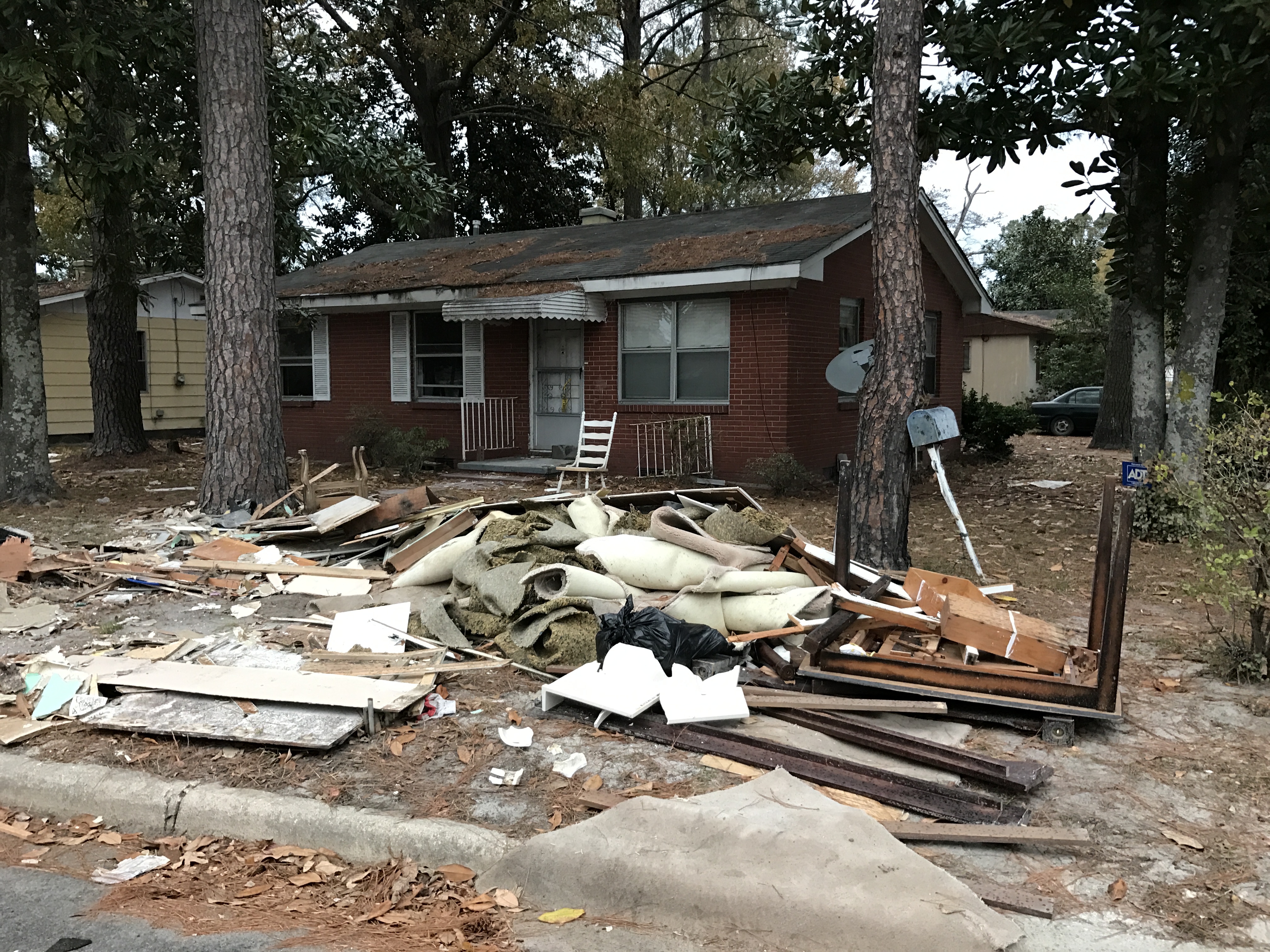
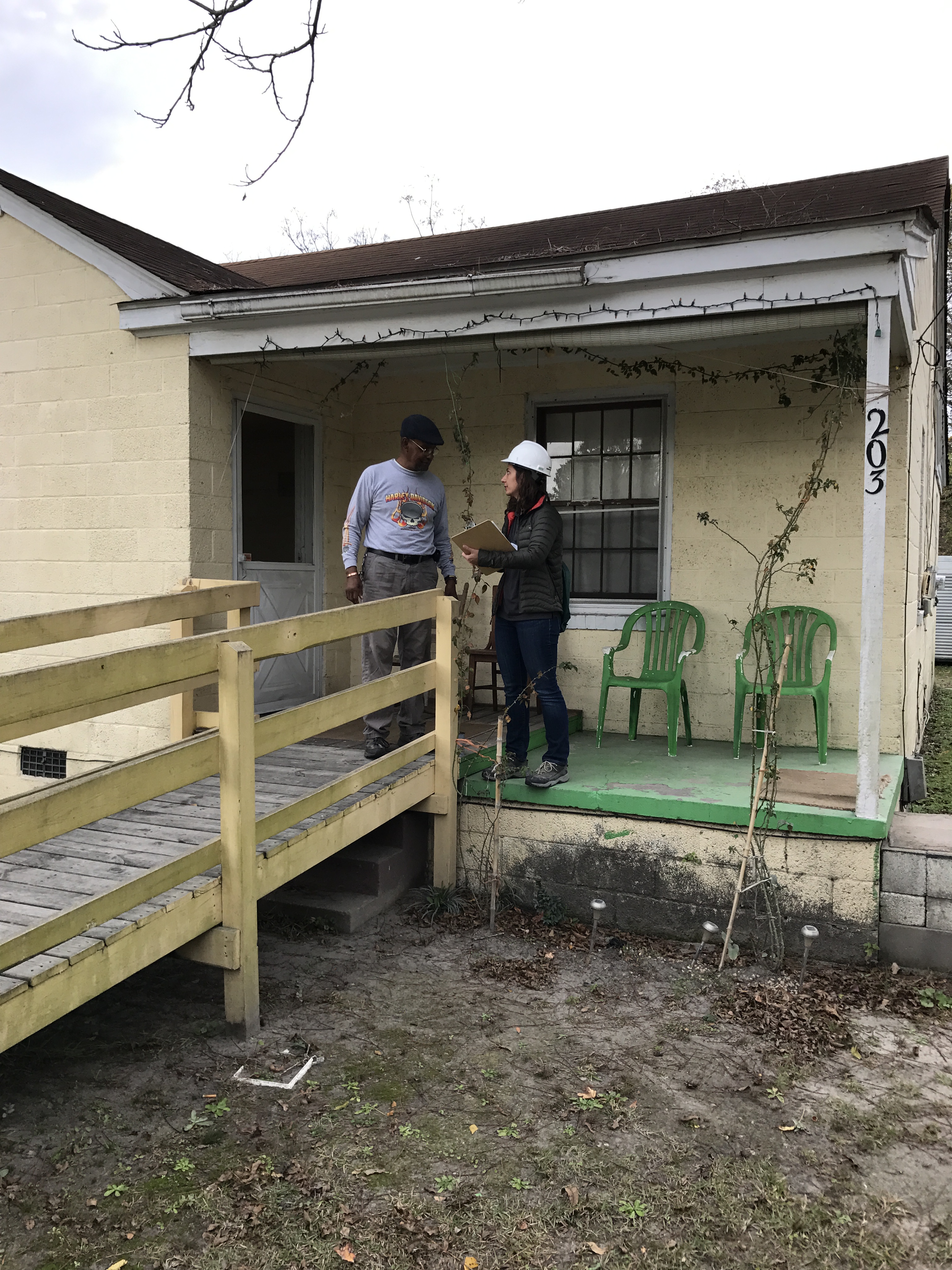
Her landmark work came through the National Institute of Standards and Technology’s Center of Excellence for Risk-Based Community Resilience Planning, a decade-long, multi-million-dollar project led out of Colorado State University. Sutley led one of the largest and most collaborative efforts on the project: a longitudinal field study in Lumberton, North Carolina, which originated after 2016 Hurricane Matthew. Over the course of 7 years, Sutley led 58 different team members spanning a dozen Universities and NIST researchers in the effort. Sutley and her team returned to the same community impacted by disasters year after year to survey residents, interview businesses, talk with school and community officials and document how recovery actually unfolded.
“Traditionally, structural engineers show up after a disaster, document the damage and leave,” Sutley said. “We wanted to understand the long-term picture: what repair looks like, how resources flow, what decision-making processes unfold and how the different sectors intersect.”
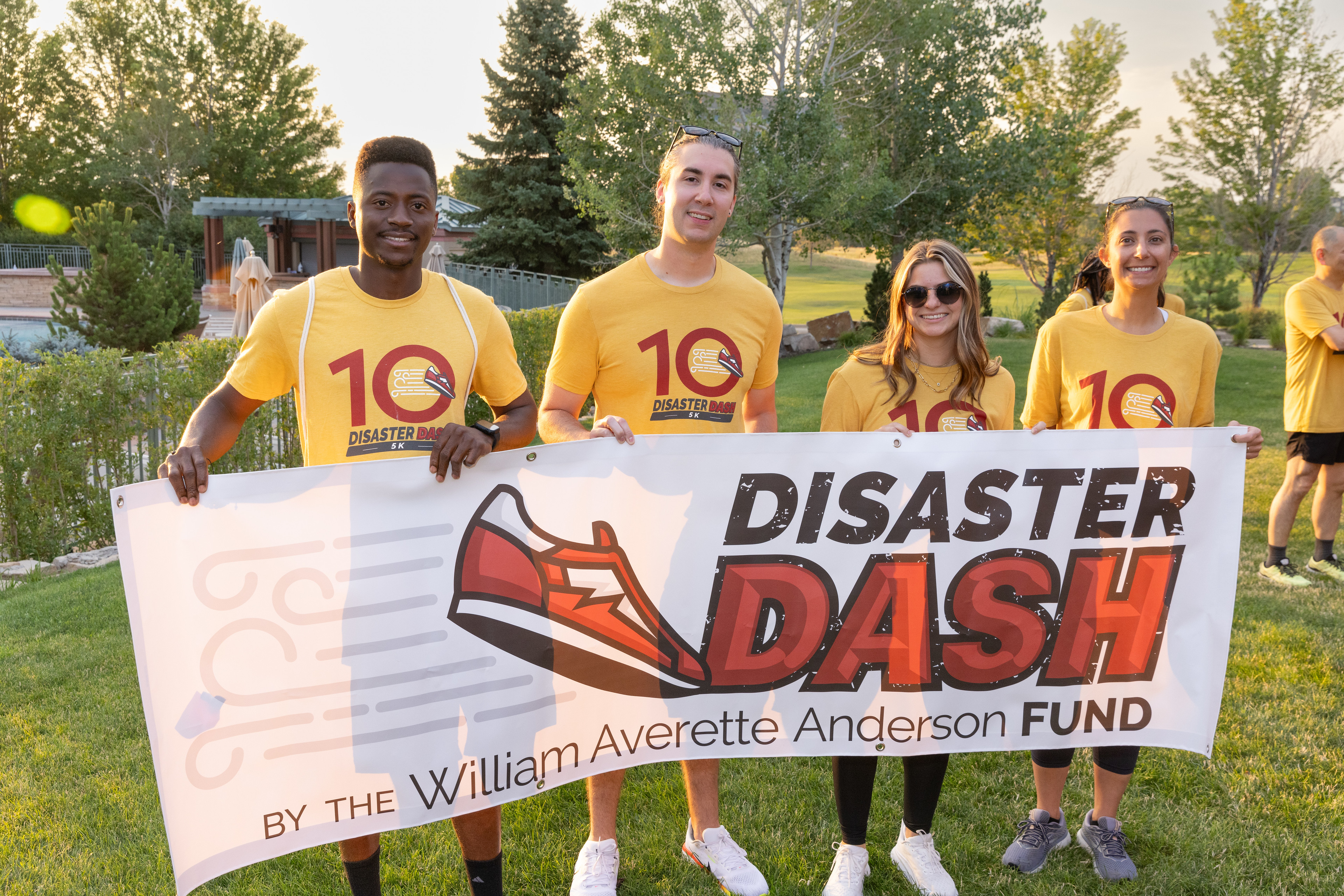
The data from the field work informed a number of resilience models that have been incorporated into a tool called IN-CORE.
The project, which officially wrapped up earlier this summer, was groundbreaking. The resilience models her team developed are now being used by city officials in Salt Lake City, Joplin, and Galveston to inform their local decision-making.
“I don’t know if I’ll ever know the full impact our study will have,” she said. “But to be able to say that real communities are using our tools to make decisions – that means a great deal to all of us.”
When Tornadoes Hit Home
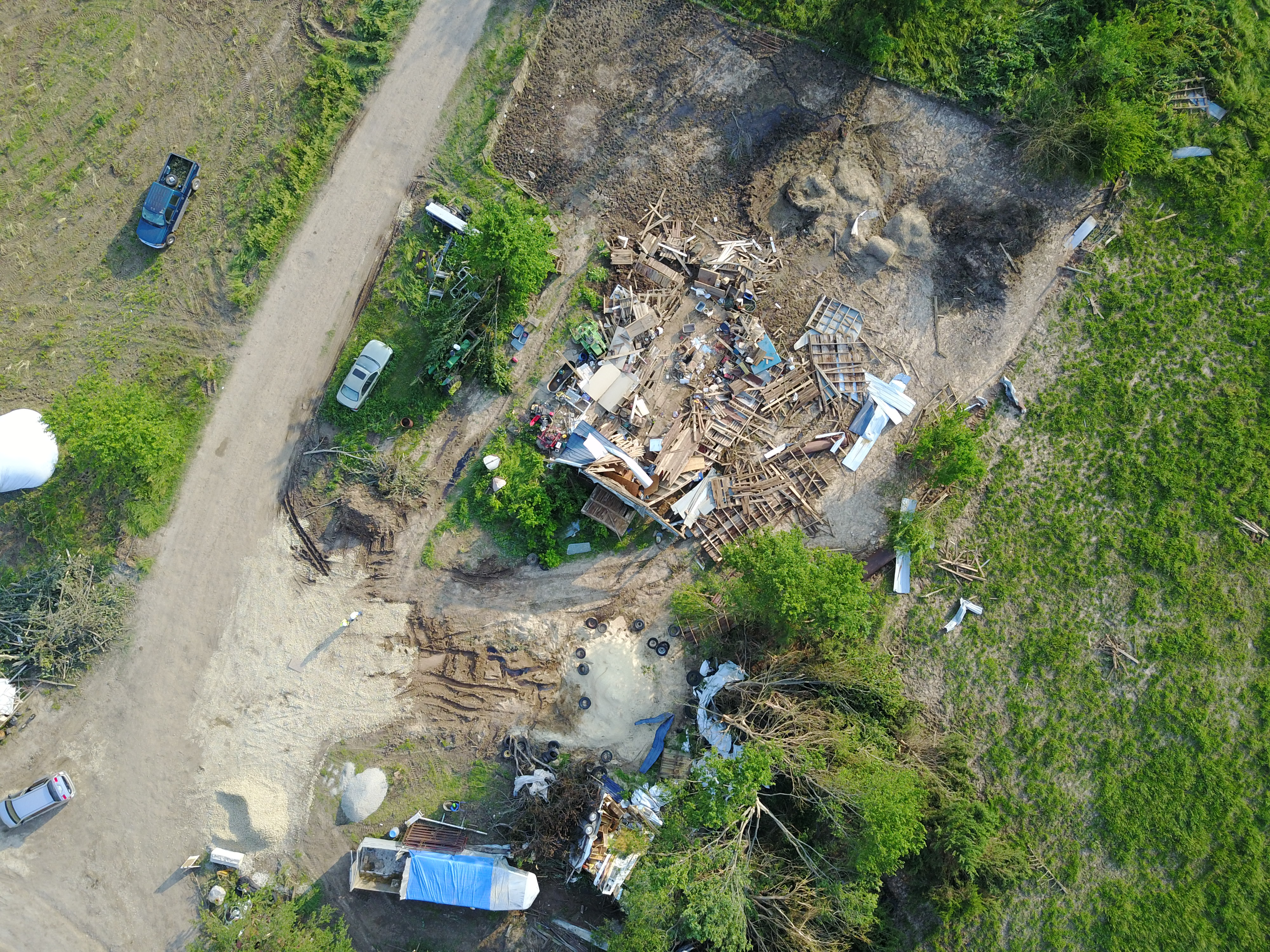
In 2019, community resilience came a bit closer to home when an EF4 tornado tore a 32-mile path across the region, damaging over 300 structures in Linwood and the Bonner Springs area. Within days, Sutley had pulled together a team to investigate damage and initial impact.
What they found was both familiar and frustrating: nails misfired, anchorage missing and corners cut in construction.
“You read about these things in other events, but seeing them in person was still shocking,” she said.
After her research, Sutley and her team began raising awareness, speaking with local building officials, homebuilders and engineering groups about the gaps in construction quality and inspection. She even appeared on PBS to share her findings with a broader audience. While no sweeping policy changes followed immediately, she believes the awareness mattered.
“Education is hard to measure,” she said. “But even having conversations about what’s possible can spark change.”
Six years after the destruction, Sutley is still hard at work providing research into community resilience within Kansas communities. Her most recent project, funded by NSF, focuses on adaptive and resilient infrastructures driven by social equity. The project has already led to surprising discoveries and is being used to help drive community decisions.
Wyandotte County, in far eastern Kansas, encompasses much of the Kansas City metropolitan area on the Kansas side of the state line. Sutley said county officials there wanted to use her team’s research to see how it could benefit their community.
“We worked with them to develop an online dashboard for the data we had collected,” Sutley said. “While the project was always focused on developing decision support tools, the dashboard specifically came about through a request from one of our partners from Wyandotte’s Unified Government. I’m hoping the outcomes of this project will be really beneficial for Kansas.”
This project brings together other universities, including Kansas State University and Wichita State University, as well as four Kansas counties, in addition to Wyandotte. Now an expert in cross-institutional research, Sutley is well-versed in bridging the gaps in disciplines and says building relationships is key.
“It’s important to have time that’s not just agenda-driven,” she said. “When you actually know your colleagues, you feel more comfortable asking questions – even the ones that feel dumb – and that makes collaboration more productive.”
As this project moves into its fourth of five years, Sutley is looking forward to the benefits the research will provide in the future.
“These partnerships are meaningful,” she said. “It’s about making research useful, not just publishable.”
Climate, Codes and Communities
These partnerships will hopefully benefit the future of engineering and the updating of outdated building codes.

“People assume buildings are designed to higher standards than they actually are,” she said.
According to Sutley, many urban areas in Kansas have codes on the books, but many are decades out of date, and vast swaths of rural Kansas have no codes at all.
“Adopting and enforcing the code is just the minimum,” she said. “We should be doing more, but even the minimum would put us in a much better position.”
Climate change, meanwhile, presents a moving target. Building codes today don’t formally account for it, though efforts are underway. Hurricanes are stalling longer, wildfires are spreading farther and rainfall is intensifying. Societal factors also complicate the picture with different administrations taking different stances on regulation and research funding.
“These shifts matter because they shape what we can study, what gets funded and what communities can do,” said Sutley.
The work, however, continues despite a shifting landscape. Thanks to a collaboration and contribution from the Federal Emergency Management Agency, Sutley and her team have three manufactured homes they plan on testing in the Florida International University’s wind tunnel. Sutley hopes this project will lead to the first major updates to the Housing and Urban Development code since 1994.
Lately, Sutley has her sights on co-establishing research infrastructure that supports long-term disaster resilience research for all. The hope is for a decadal project worth millions of dollars that could close the gap in connection the impact of mitigation to recovery, how communities adapt to chronic hazards, and on closing the gaps in long-term recovery. The idea is still in the process of being reviewed, but she’s not planning on giving up without a fight.
“The team is committed to keep trying until we get something,” she said. “That’s a big research goal of mine, to be able to continue doing longitudinal research and being able to bridge the temporal gap for hazards and disasters.”
Teaching Resilience
Despite the scope of her projects, Sutley’s favorite part of the job remains her students. In particular, she highlights the satisfaction of being able to mentor all students from undergraduate to graduate-level students.
“I’ve worked with so many students,” she said. “To see them learn so much and find their passions around these topics makes my career that much more fun.”
And for the next generation of engineers looking to make change, her advice is simple: get involved. Whether it’s student organizations, national standards committees or local community projects, Sutley knows that real-world engagement builds the perspective necessary to tackle engineering’s biggest challenges.
“Getting involved in the community could give you some different experiences alongside the ones you’ll get in the classroom,” she said. “If you can’t directly be involved with the thing you want to change, back it up the pipeline and find the place you can get involved.”
Photos provided by Elaina Sutley.