Clearing the Air
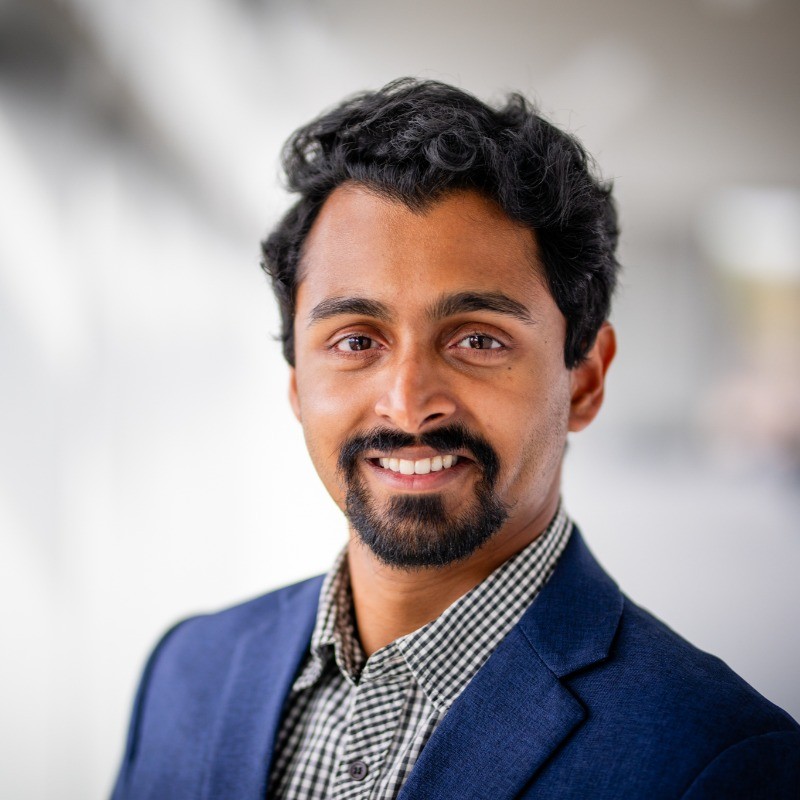
If you’re indoors, take a deep breath, and then think about how you assumed it was safe to do that. There’s science behind making the indoor air we breathe safe, and it comes from people like Nishit Shetty who just want to help the industry reach that goal.
Shetty, an assistant professor in KU’s Civil, Environmental & Architectural Engineering department, studies aerosol science, air quality, biomass burning emissions and bioaerosols. But the throughline of his work is a desire to help and effect change wherever he can.
“What interests me in all of this is having research that impacts people,” Shetty said. “They know getting sick is not good. They know breathing smoke is not good, but they don’t always know what the best way to prevent that is.”
Shetty grew up in India, surrounded by pollution and its effects. While he was earning his bachelor’s in chemical engineering from the Indian Institute of Technology in 2016, two professors, Sameer Dalvi and Pratyush Dayal, took a chance on him and led him into research.
He came out of the experience immediately interested in seeking a Ph.D. in energy, environmental and chemical engineering at Washington University in St. Louis, where, inspired by his origins, he studied wildfires, beginning his ascent into studying air.
When the pandemic hit near the end of his Ph.D., his focus shifted to biological aerosols. As a postdoc, he worked on developing a breathalyzer for COVID before moving to flu research at Virginia Tech.
By then, Shetty had established a clear pattern of studying the air in whatever way the world needed most. He joined KU in 2024 to teach and build his Complex Aerosols Systems Lab, which studies indoor air to protect people from disease and smoke.
“I think the best amalgamation of everything I’ve done was looking at indoor air,” Shetty said, “where we have both biological contaminants as well as wildfire contaminants. We spend a lot of our time in enclosed spaces, so we should make sure that it’s safe for humans.”
His lab is currently working on detecting mold before it’s visible and developing interventions for indoor contaminants, including wildfire smoke. The team uses chemical characterization equipment and culturing materials to examine mold’s genetic material, along with particle sizers and low-cost sensors to measure tiny particles in the air.
The mold project looks at which types grow in different environments and tries to predict when and where they will appear. Recently, the team has been testing whether predictive AI models can help with early detection. According to Shetty, “the jury’s still out.”
“AI is one thing that, for better or worse, has come into all of our lives,” he said, “and my philosophy with it has been that if you can’t beat it, you have to make sure you use it properly.”
He’s most excited about portable instruments like the AeroTraK, which “measures particle concentrations as a function of their size.” In the field, he gets to see the changes he could make play out in front of him.
“Conducting field research is what excites me and what I look forward to,” Shetty said. “Seeing the application of our research is on another level for me.”
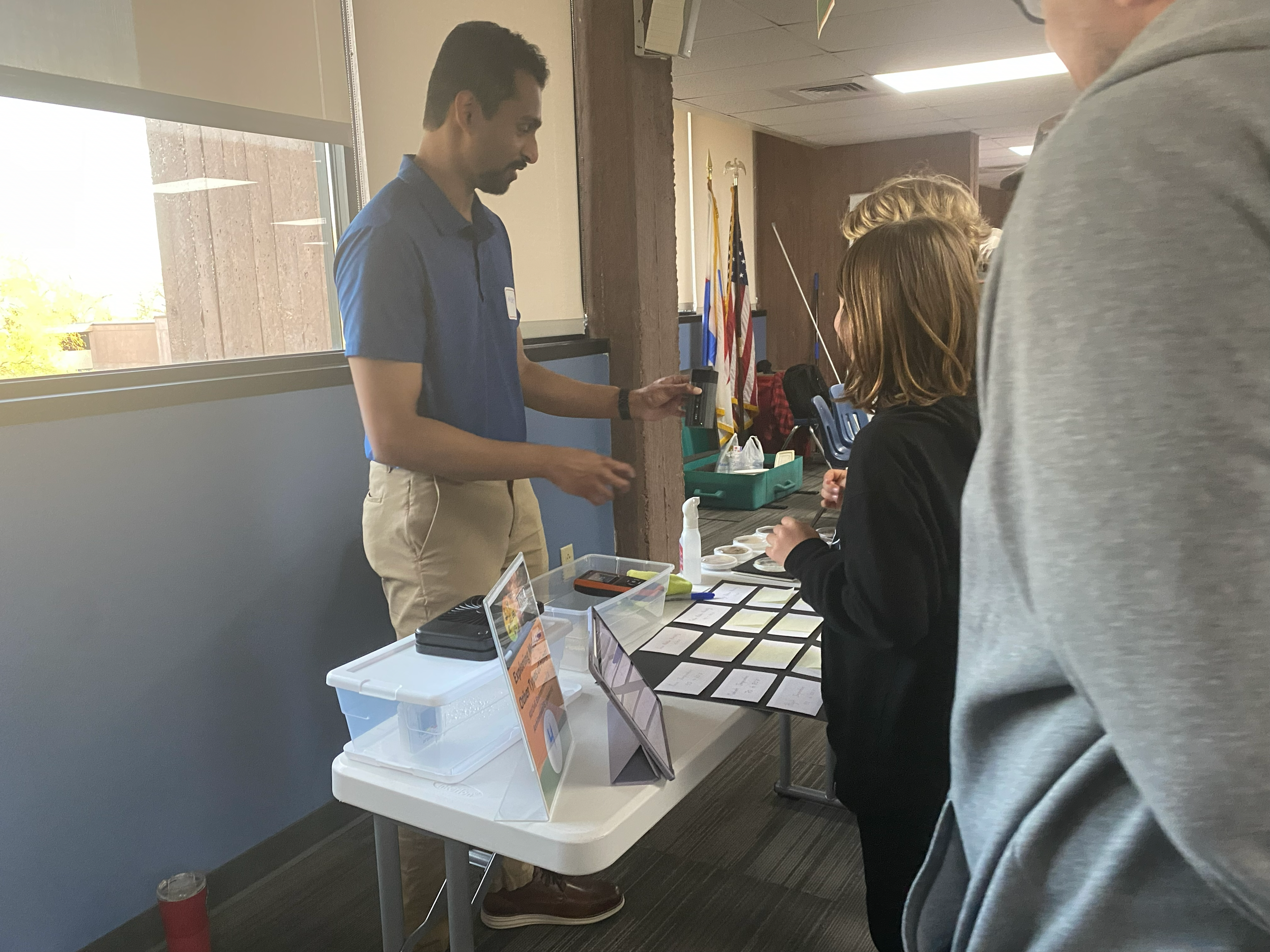
Shetty hopes to change standards and best practices for indoor air, with his research informing public health and government policy. He also sees a need to protect people from ineffective and potentially harmful devices, having watched a company silence scientists in the past.
“We didn’t name the company in our paper,” Shetty said, “but we showed through experiments that their product was not working. That’s what we can do as scientists: make sure a company’s product is actually working.”
In the next five to 10 years, Shetty would like to have “a self-sustaining program, which looks at the best interventions for keeping indoor air safe,” and to make progress on the fate and transport of contaminants: where they come from, what they’re doing and how to get them out.
Photo provided by Nishit Shetty.